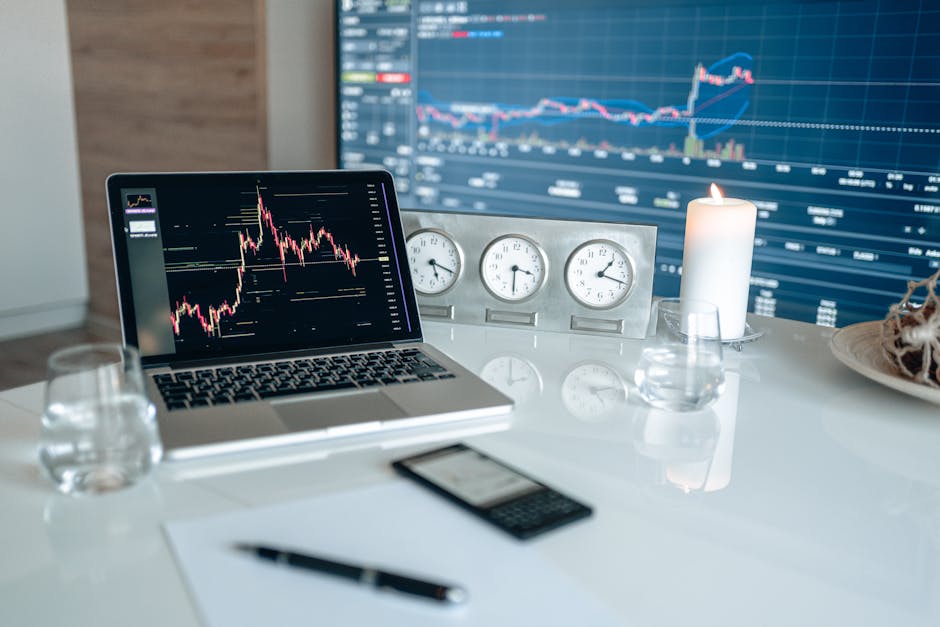
Photo by AlphaTradeZone on Pexels
FX Forward: The Institutional Flow Retail Traders Miss
Quick Answer
An FX forward is a binding contract to exchange a specific amount of currency at a fixed rate on a future date. The rate is set today based on the current spot rate plus the interest rate differential between the two currencies. Institutions—banks, corporations, hedge funds—use FX forwards to lock in prices weeks or months ahead. When those contracts settle, they create real spot market buying and selling at predetermined times. That activity is what retail traders experience as sudden moves, stop hunts, and reversals that appear to ignore everything on the chart.
In this post
Most explanations of an FX forward start by telling you what it is. This one starts by telling you what it does to the market while you are trying to trade it. (My apprentice suggested I lead with the definition anyway. I informed him that was the old way. He informed me that was what every other post does. I told him that was rather the point.)
You have probably had the experience. Good setup, clean price action, solid risk-reward. You pull the trigger, set your stop where the structure told you to, and wait. Price goes exactly where you did not want it to go. Your stop is hit. Then price reverses and hits your original target without you in it.
You think: my analysis was right but I still lost. Rinse, repeat. Most traders blame themselves. Some blame the spread. A few blame a conspiracy. The actual answer is more boring and more useful than any of those: it was forward settlement flow.
What Is an FX Forward Contract?
An FX forward contract is an agreement between two parties to exchange a specific amount of one currency for another at a fixed rate—the forward rate—on a future date agreed upfront.
That future date is typically anywhere from a few days to twelve months ahead, though some contracts extend further. The rate is locked at the time of agreement regardless of where the spot rate sits on settlement day. You agree today. You pay on the date. In between, the market does whatever it likes—but your rate does not move.
According to the Bank for International Settlements, the global FX market turns over approximately $7.5 trillion per day. A significant portion of that is forward-related activity—rollovers, hedges, and settlement flows. This is not a niche corner of the market. It is one of the largest components of global currency trading.
And almost none of it is visible to retail traders watching a five-minute chart.
How the Forward Rate Is Calculated
The forward rate is not a prediction. That is the first thing most explanations get wrong.
It is calculated mechanically from three inputs: the current spot rate, the interest rate in the base currency country, and the interest rate in the quote currency country. The principle is called interest rate parity. The short version: if UK interest rates are higher than US rates, the forward rate for GBP/USD will be slightly lower than spot. This compensates for the fact that holding pounds earns more interest—so the forward rate adjusts to remove that advantage and prevent arbitrage.
The result is a forward rate that carries a premium or a discount relative to spot, depending on which way the rate differential runs. (My apprentice spent his first week calling one of our examples a premium when it was a discount. I told him the market had already given him a forward on his education. He groaned. I considered that a success.)
The important point: the forward rate is not where anyone thinks the currency will be in six months. It is where the math says it has to be today given current rates and differentials. A business booking a foreign exchange forward contract to buy euros in 90 days is not placing a directional bet. They are removing uncertainty from their costs. The rate they lock in is determined by arithmetic, not forecasting.

Photo by AlphaTradeZone on Pexels
Why Institutions Use FX Forwards
There are two broad reasons, and both matter for anyone trying to understand price movement.
The first is hedging. Corporations with cross-border revenues or costs lock in rates to protect their budgets. A UK company expecting five million US dollars from an American client in 90 days does not want exchange rate exposure. They sell five million dollars forward at today's forward rate. Done. Whatever GBP/USD does in those 90 days, their sterling value is fixed. The same applies to an airline buying jet fuel priced in dollars while earning revenue in pounds. The forward is not a trade. It is budget protection.
The second is positioning. Banks and hedge funds use FX forwards to express views on where a currency pair is going. Unlike spot trades, which settle within two business days, a forward lets them take a position with a specific time horizon and lock in a fx forward rate they believe will prove advantageous by settlement date.
These two types of flow—corporate hedging and institutional positioning—both run through the same forward market. A defensive corporate and a speculative bank are both contributing to the same forward curve.
Here is the part most retail traders were never taught: those forward positions eventually settle. When they do, real buying or selling happens in the spot market. That creates real price movement—at a time, and in a direction, determined by decisions made weeks earlier. The FCA's guidance on foreign exchange markets notes the scale and complexity of institutional FX activity—activity that shapes the spot rates retail traders are reacting to in real time.
How Forward Flows Create the Price You Trade
This is where it connects directly to anyone sitting at a chart.
Imagine a large corporate client has booked a forward contract to sell EUR/GBP in 30 days—equivalent to £200 million. When that contract settles, a bank needs to buy EUR/GBP on their behalf. That is a substantial order. It does not slip through the market gently. You can read more about how this kind of flow operates in our post on order flow trading.
Now add the calendar. It is end of month. Other corporates are settling or rolling their own contracts. Pension funds are rebalancing currency exposure. There are significant flows from multiple directions, all converging on the same settlement window. This is what market professionals call end-of-month fixing.
This is when spot price often does something that looks erratic to retail traders. Sharp moves. Apparent breaks of structure. Reversals that seem to ignore everything on the chart. Stops getting hit and then price going exactly where it was always going.
It is not erratic. It is mechanically predictable. The flow was agreed 30 days ago. The retail trader watching a candlestick formation and thinking "breakout" is reacting to institutional settlement in real time. Their indicator fired at the right moment for the wrong reason.
(Yes, I know how that sounds. The first time I actually understood this, I sat with it for about a week. A lot of losses I had written off as bad luck or poor discipline started looking different. Not conspiracy—just mechanics I had not known to look for. We move forward. Deliberately, in this case.)
This is also connected to the concept of liquidity in trading: large forward settlements consume liquidity at specific levels, and that consumption is what creates the price spikes retail traders see as stop hunts. Understanding why order blocks form at certain levels starts to make more sense once you understand that institutional orders—including forward settlements—are what creates those levels in the first place.

Photo by RDNE Stock project on Pexels
What This Means If You Are a Retail Trader
Understanding FX forward flows will not give you a trading signal. Let me be direct about that before you start building a settlement-date calendar system with twelve tabs.
What it gives you is context. And context is what determines whether a setup has any business being entered at all. This is the core of what most retail traders have never been taught: the problem is almost never the entry. It is not knowing why price is at a particular level at a particular time.
If you trade purely on price action, forward contracts are the mechanism you are already watching—you just did not have the vocabulary for it. The confluence of signals your chart is showing you is, in many cases, the surface expression of institutional activity that was agreed weeks before you opened your platform.
This is not a reason to give up on technical analysis. It is a reason to hold it more lightly.
Retail tools were built to read price. They were not built to read the forward curve, interest rate differentials, or end-of-month fixing flows. They react to what has already happened. By the time your indicator signals a move, the institutional flow driving that move has already been in the market—sometimes for weeks. That is not a bug in your system. It is the structural reality of how the FX market is built.
The traders who last are not the ones who find the perfect indicator. They are the ones who develop an understanding of why the losses keep happening at a structural level—and adjust their approach accordingly.
Who this is not for
If you are a scalper working on a one-minute chart looking for a technical edge, forward contract mechanics are too far upstream to be immediately useful. This knowledge is most valuable to swing traders and position traders—anyone holding trades for more than a day, where forward settlement windows can directly affect open positions. It is also relevant to anyone who has noticed that their losses cluster at certain times of the month and wants to know why.
When NOT to Trade Around Forward Settlement Windows
Here is the practical side. (My wife calls this my “bad mood window” section. I call it scheduled institutional volatility. We are both correct.)
There are specific periods when forward-related flows tend to concentrate. Trading during these windows—particularly with tight stops on directional trades—is a reliable way to get cleared out of a position that was structurally correct by a move that had nothing to do with your analysis.
- •End of month (last 3 trading days): When corporate hedges settle and banks roll forward positions. This is the most predictable high-flow window in the FX calendar.
- •End of quarter: March, June, September, and December see larger fixing activity as funds rebalance currency exposure. Expect amplified versions of end-of-month behaviour.
- •Friday London close (3pm–5pm GMT): One of the highest-volume fixing windows of the week. Spreads widen, flow concentrates, and retail price action becomes unreliable.
- •Major economic release windows: Not because of the announcement itself, but because institutional flow often concentrates around these events. The move you see is not always the news reaction.
Knowing when the market is in a settlement window does not mean you stop trading entirely. It means you widen your stops if you do trade, reduce your size, and—more often than not—step back and let the flow clear before looking for entries.
Understanding the rhythm of when sessions overlap and when institutional activity peaks is the foundation of this. Forward settlement timing is one layer deeper. Both are about the same thing: knowing when the market is being driven by forces your chart cannot see.
For a more detailed look at how to size positions and protect capital around high-flow periods, the post on forex risk management covers the practical side. The Bank of England's foreign exchange index also gives a useful overview of the scale of institutional FX activity in the UK market, which adds some context to why retail participants are always playing in a market built for much larger flows.
Frequently Asked Questions
What is an FX forward contract?
An FX forward contract is a binding agreement to exchange a set amount of one currency for another at a fixed rate on a future date. Unlike a spot trade, which settles within two business days, a forward contract locks in the exchange rate weeks or months in advance. The rate is calculated from the current spot rate and the interest rate differential between the two currencies.
How does the forward rate differ from the spot rate?
The spot rate is the current exchange rate for immediate delivery. The forward rate adjusts the spot rate by adding or subtracting a premium or discount based on the interest rate differential between the two countries. If the base currency country has higher interest rates, the forward rate will be at a discount to spot. This adjustment is a mechanical calculation — not a prediction of where the market is heading.
Who uses FX forward contracts?
FX forwards are primarily used by corporations with cross-border revenues or costs, banks managing currency exposure on behalf of clients, and institutional investors taking medium-term views on currency direction. A UK exporter expecting payment in euros, or a business paying overseas suppliers in dollars, will often use a forward to lock in a known rate and protect their margins.
Do FX forward flows affect the retail spot trading market?
Yes. When large forward contracts settle, the resulting spot market activity creates real price movement. End-of-month and end-of-quarter windows are particularly affected as corporate hedges settle and institutional positions roll. Retail traders often experience this as unexplained volatility or stop hunts — movements that have nothing to do with the retail setup that triggered entry.
What is the difference between an FX forward and a futures contract?
Both allow you to agree a rate for future delivery, but futures are standardised contracts traded on regulated exchanges with fixed contract sizes and expiry dates. FX forwards are over-the-counter contracts negotiated directly between two parties, making them flexible in terms of amount, currency pair, and settlement date. Most corporate hedging uses forwards. Most speculative trading of currency futures uses exchange-traded contracts.
When are FX forward settlement flows most likely to affect spot price?
Forward-related flows tend to concentrate around end-of-month fixing windows (last three trading days of the month), end-of-quarter periods, and the Friday London close — particularly between 3pm and 5pm GMT. During these windows, large corporate hedges settle and institutional positions roll, creating spot market activity that retail indicators were never designed to read.
Marco has traded forex from London since 2009. He spent the better part of a decade trying to outthink institutional price action before understanding that the answer was not a smarter system—it was knowing what was actually happening. He built Rethink Forex to give retail traders the institutional context no course had ever given him. If you are still reading, you now know more about how price actually moves than most traders with years of chart experience. That does not mean the next trade will be easy. It means you are pointing at the right thing.
Start Seeing What's Really Moving Price
Most traders react to price. Learn to read what drives it.
Learn More