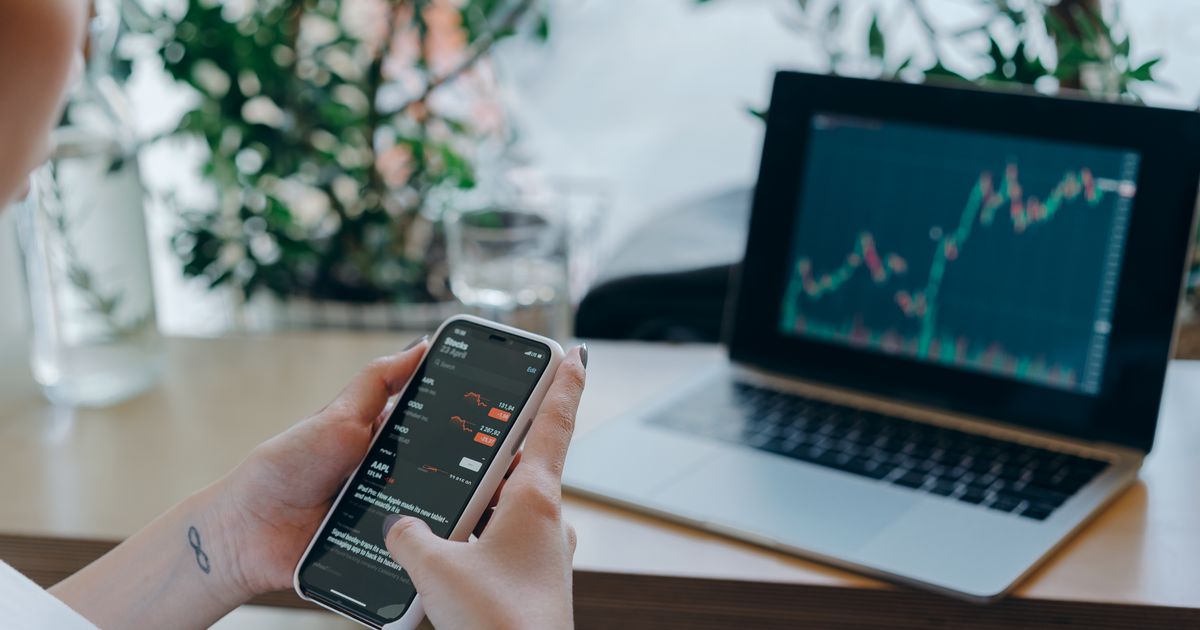
Photo by Mikhail Nilov on Pexels
Is Forex Trading Halal? The Mechanism Behind It
Quick Answer
Forex trading is generally considered halal when it avoids riba, or interest, most commonly by using a swap-free Islamic trading account that removes the overnight interest charge on open positions. The specific concern is not currency trading itself, but the swap fee charged for holding a leveraged position past close, which is calculated from an interest rate differential. This article explains that mechanism. It is not a religious ruling, and it is not trying to be one.
Ask ten people whether forex trading is halal and you will get eleven answers, three of which contradict themselves halfway through. (I counted once, out of curiosity, at an amount of coffee I am not proud of.) If you searched is forex trading halal after reading a forum thread, a broker landing page calling itself "100% Sharia compliant," and a fatwa that seemed to say the opposite, you already know the frustration. You are not confused because you are bad at this. You are confused because the honest answer requires a bit more precision than most pages bother giving it.
This post explains the actual financial mechanism at the centre of the halal and haram debate, why it exists, and how swap-free Islamic accounts address it. Whether you searched is forex trading halal in Islam, is currency trading halal, or simply is forex halal, the underlying mechanism you are looking for is the same one. I am not a religious scholar and this is not a fatwa — I will say clearly where you need to stop trusting a trading blog and go ask one.
Five different answers, and none of them felt trustworthy
Here is a version of this a lot of Muslim traders have lived through. You wanted to learn to trade, or you already had, and then a friend, a comment section, or your own conscience raised the question. So you searched. One broker page confidently declared itself fully halal. Another forum thread said all forex is gambling and therefore haram, full stop. A YouTube video split the difference and left you more unsure than before you watched it. Nobody explained why they disagreed, just that they did.
That inconsistency is not your fault, and it is not a sign the question is unanswerable. It is a sign that most of what gets published mixes two separate things together — a religious ruling on speculation, and a technical description of one specific fee — without ever saying so.
This comes down to one mechanism, not a hundred opinions
Strip away the disagreement and almost every credible discussion of halal forex trading centres on one specific thing: the swap, also called the rollover fee, charged when you hold a leveraged position open overnight. That fee is calculated from the interest rate differential between the two currencies in the pair — which makes it interest, or riba, and riba is where the scholarly consensus is clearest and most consistent. The Accounting and Auditing Organization for Islamic Financial Institutions publishes the Shari'ah standards most Islamic finance institutions reference on exactly this point.
Understanding this one mechanism does more for your confidence than reading another twenty opinion pieces. It is the same principle behind reading price action instead of just reacting to it — the specific reason matters more than the general impression, whether you are analysing a chart or a fee schedule.

Photo by Jakub Zerdzicki on Pexels
What the swap fee actually is, in plain terms
Every currency has its own interest rate, set by its central bank. When you hold a forex position overnight, you are effectively borrowing one currency to hold the other, and the swap fee is the interest on that borrowing, priced through from the real interbank market, not invented by your broker. This is not a fee designed to catch anyone out. It is the same structural mechanism institutions price into every overnight position, just passed down to a retail account.
That single fee, and nothing else about buying or selling currency, is what a swap-free Islamic account is built to remove. Currency exchange itself has a long, recognised place in Islamic finance. The interest charged for holding a leveraged position past close is the specific, addressable problem.
How swap-free Islamic accounts actually work
A swap-free or Islamic account does exactly what the name says: it removes the overnight interest charge. What it does not do, in almost every case, is make holding a position overnight free. Brokers still have a real cost to fund your leveraged position, so that cost tends to reappear somewhere else on the account.
- →A wider spread — the gap between buy and sell price is priced slightly wider than on a standard account, recovering the cost on every trade rather than every night.
- →A fixed administration fee — some brokers charge a flat daily or per-position fee once a trade has been open longer than a set number of days, structured as a service charge rather than interest.
- →Restricted instruments or holding periods — a small number of brokers limit swap-free status to certain pairs, or automatically convert accounts back to standard terms after a set number of days.

Photo by Ron Lach on Pexels
Where the cost actually goes, and why that matters
(My apprentice, on hearing all this for the first time, asked whether a "halal-washed" account was just a normal account with a different name on the sign-up page. I told him that is exactly the risk — and exactly why the fee structure matters more than the label.)
A broker calling an account "100% Sharia compliant" is a marketing claim, not a guarantee, and it is worth treating it the same way you would treat any other bold marketing claim — sure, heard that pitch before, now show me the actual fee schedule. Comparing the spread and any administration fee on the Islamic account against the standard account, over your typical holding period, tells you the honest total cost. Sometimes it is genuinely close to equal. Sometimes the widened spread quietly costs more than the swap fee ever would have.
None of this makes an Islamic account a scam, and none of it changes whether removing interest addresses the core religious concern — it does. It simply means "swap-free" describes one specific, verifiable mechanism, not a blanket promise that the account is free, cheap, or risk-free in every other sense.
When not to take my word for it
I have traded forex from London since 2009. I am not, and have never claimed to be, a religious scholar, and if part of you is wondering why a trading site is answering a religious question at all, that is a fair thing to wonder. The honest answer is that I can explain the mechanism accurately. I cannot and should not issue a ruling on your personal situation — that belongs with a qualified Islamic scholar who can weigh the details of how and why you trade, not a website that has never met you.
What I can tell you plainly is this: removing the swap fee does not remove trading risk. An Islamic account can still lead to a blown account exactly the same way a standard one can, through oversized leverage or a plan that was never really a plan. UK-regulated brokers still cap leverage and require the same FCA consumer protections on an Islamic account as a standard one — none of that changes because the swap fee is gone. If your reason for choosing a swap-free account is genuinely about riba, verify the fee structure and ask your own questions. If part of the appeal was assuming "halal" also meant "safe," that assumption needs correcting regardless of which account type you choose, and sound risk management — proper position sizing and a real risk-reward ratio, not just an interest-free label — matters just as much on either one.
Frequently asked questions
Is forex trading halal?
Most scholars agree forex trading can be structured to be halal, provided it avoids riba (interest), primarily through a swap-free Islamic trading account that removes the overnight interest charge. The question of whether currency speculation itself is permissible is a separate scholarly discussion, and this article explains the trading mechanism, not the religious ruling.
What makes standard forex trading potentially haram?
The main concern is the swap or rollover fee charged when a leveraged position is held open overnight, which is calculated from the interest rate differential between the two currencies and functions as interest, or riba. Some scholars also raise concerns about gharar, or excessive uncertainty, in highly leveraged speculation.
How does a swap-free Islamic account work?
A swap-free or Islamic trading account removes the overnight interest charge on open positions. Brokers do not simply absorb this cost, they usually recover it another way, most often through a wider spread or a fixed administration fee, so the account avoids interest without necessarily being cheaper to trade.
Is currency trading haram in Islam?
Currency trading itself is not inherently haram, since currency exchange has a long-established basis in Islamic finance. The concerns raised by scholars relate to specific mechanics of modern retail trading, particularly interest-based swap fees and high leverage, both of which can be addressed through account structure rather than avoiding currency trading entirely.
Do Islamic accounts cost more to trade with?
Often, yes, though the cost shows up differently. Instead of an overnight swap fee, many Islamic accounts charge a wider spread on every trade or a fixed administration fee for positions held longer than a set number of days. Comparing the total cost of both account types over your typical holding period is the honest way to compare them.
Should I ask a religious scholar before trading forex?
Yes, if you want a definitive ruling for your personal situation. This article explains the financial mechanism behind the halal and haram debate so you understand what a broker is actually offering, but the religious ruling itself should come from a qualified Islamic scholar, not a trading education site.
Marco Stavros has traded forex from London since 2009. He is not a religious scholar and has never pretended to be one, but he has spent enough years reading swap schedules line by line to know exactly where the fee lives and where brokers like to hide it instead. His apprentice now checks a broker fee schedule before he checks the spread, which took considerably less convincing than most lessons. Learn more about Marco.
Start Seeing What's Really Moving Price
Most traders react to price. Learn to read what drives it.
See how Rethink Forex works