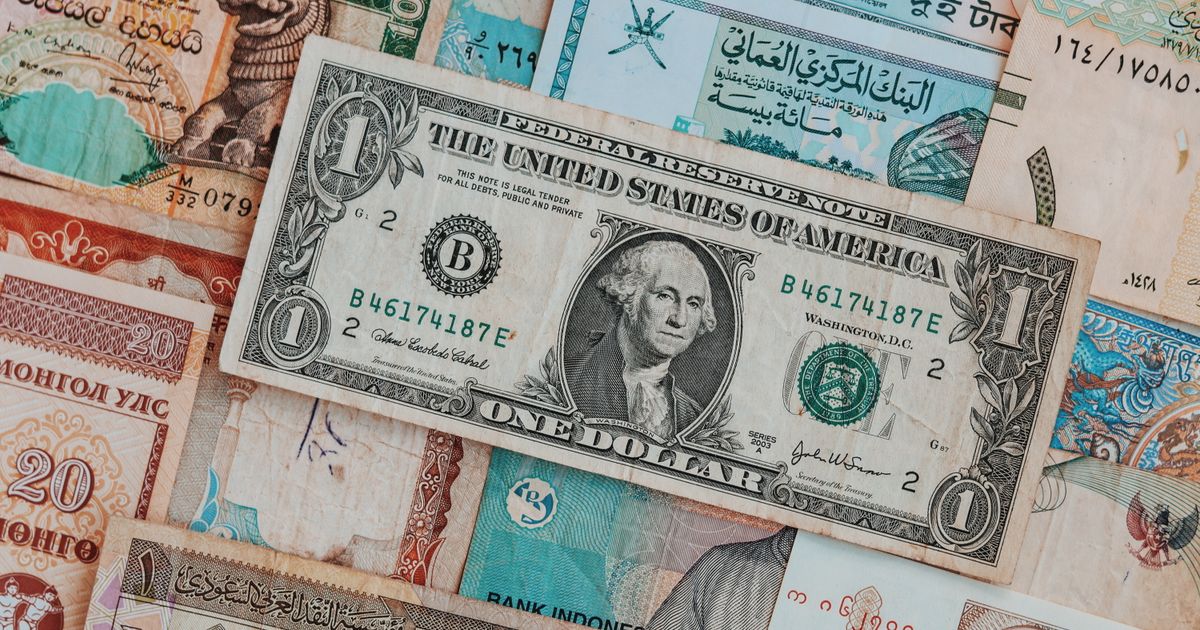
Photo by Pratikxox on Pexels
Strongest Currency in the World: Why Bigger Is Not Stronger
Quick Answer
The Kuwaiti Dinar is the world's most valuable currency by face value, trading at roughly £2.42. That is not the same as being the world's strongest currency in any sense that matters to a trader — measured by actual trading activity, the US dollar sits on one side of 89% of all daily foreign exchange trades, more than eight times sterling's share.
Ask anyone down the pub which currency is “strongest” and they will point at whichever number looks biggest on the currency converter. By that logic my bench press outlifts an Olympic weightlifter, purely because I am wearing a heavier watch. (I am not. The watch is from a market stall in Bangkok and it has never once told the correct time.)
Type which is the strongest currency in the world into Google and you will get the same answer from a dozen broker blogs: the Kuwaiti Dinar, because one dinar buys more pounds than almost any other currency on earth. That answer is correct and almost useless, and confusing the two is a mistake that has cost real traders real money.
The short that would not bounce
Here is the version of this that plays out on thousands of accounts every year, usually with the Japanese yen: the exchange rate looks cheap, historically cheap, so surely it has to strengthen back toward where it “should” be. You short dollar-yen, or buy yen against your own currency, reasoning that the number is simply too low to be sustainable. It keeps falling. You add to the position, because it has to turn around eventually. It does not turn around for the better part of two years. “My analysis was right but I still lost” does not even cover it, because the analysis was never actually analysis. It was a number looking small on a screen.
None of this makes you careless. Nobody sits a retail trader down and explains what a currency's face value on a chart actually represents, so a perfectly reasonable-sounding assumption — cheap must mean due a bounce — fills the gap. That gap, not a lack of discipline, is where this specific loss usually starts.
What “strongest currency” actually means
The Kuwaiti Dinar trades at roughly £2.42 at the time of writing, the highest face value of any circulating currency, backed by a currency board that has kept it deliberately scarce and pegged to a basket of trading-partner currencies since 1961. That is a real, sourced fact, and it answers which is the strongest currency in the world in the sense most rankings mean it: highest value per single unit.
It tells you almost nothing about whether the pound, the dollar, or the yen is about to move. A currency's face value is mostly an accident of history — how many units were in circulation when the currency was introduced, whether it has ever been redenominated, whether a government deliberately keeps it scarce. None of that has any bearing on tomorrow's direction. Cheap does not mean falling. Expensive does not mean rising.

Photo by Zulfugar Karimov on Pexels
What actually drives a currency's direction
If face value is not the signal, something else is, and it is considerably more boring and considerably more reliable: the gap between interest rates. Money behaves the way money behaves everywhere — it moves toward wherever it earns more, adjusted for risk. When one central bank holds rates well above another's, capital drifts toward the higher-yielding currency, and that flow is what actually sustains a multi-year trend, not the price tag the currency happened to start with.
The Bank of England is direct about this relationship in its own published guidance: when one country's rates rise relative to another's, its currency tends to strengthen, because investors move money to capture the better return (the kind of gap desks discuss over lunch, not something retail feeds ever surface). This is not random and it is not rigged. It is one of the most consistently observable mechanisms in the entire foreign exchange market, and it was working quietly against every “it has to bounce” yen short long before the yen actually turned.
Why the market was already positioned before you noticed
Here is the part that actually explains the losing short from the start of this piece. While retail traders were reasoning from the exchange rate's face value, larger participants were pricing the actual interest rate differential — a gap between two central banks' policy rates that gets debated, forecast, and repriced daily by every desk with a rates trader on staff. That gap was already telling a clear story about which direction carried the structural pull. The “it looks cheap” crowd was reacting to a number that never mattered. The desks watching the differential were reacting to the actual mechanism, months ahead of the reversal retail kept expecting.
Pull the trigger on “it has to bounce,” get run over as the differential keeps widening, add to the losing position because it has to turn around now, get run over again — rinse, repeat — and it is easy to end up thinking the market has a personal issue with you specifically, or that it is simply on tilt. It is not. It is a structural, interest-rate-driven trend that had nothing to do with the number you were staring at, and everything to do with a number you were never taught to look at.
Where currency rankings are actually useful
This is where the entries-versus-context distinction earns its place again. A top-10 strongest-currency list is genuinely useful for one thing: working out what your holiday money or a wire transfer is actually worth. It is close to useless for deciding which way to trade a pair, and the two questions get treated as the same question far too often.

Photo by CK Seng on Pexels
What matters more for a trader is which currencies actually move the market, and that is a completely different ranking. The Bank for International Settlements' most recent Triennial Survey found the US dollar on one side of 89% of all daily foreign exchange trades, more than eight times sterling's 10.2% share, despite the pound trading at a higher face value than the dollar on every currency converter in existence. Face value and market weight are not the same axis, and only one of them is context worth trading on — the same context covered from a different angle in why floating exchange rates are never truly free and in the interest rate market moving your forex pair.
None of this replaces reading market structure or understanding why price seems to move against you the moment you enter. It sits underneath both. Structure tells you where price is. The rate differential is frequently the reason it is heading there at all.
Who should ignore currency rankings completely
You can, and almost certainly already have, found a “strongest currencies in the world” list on every broker's blog, usually with fifteen or twenty flags and a paragraph each. There is nothing wrong with those lists for what they are. None of them, not one I have read, goes on to explain that the ranking has no bearing on your next trade. That is the actual gap, not the ranking itself.
Sure, heard that before, and I want to be precise about the claim rather than overstate it: face value is not meaningless. It matters enormously if you are converting a pension or paying for a holiday. What it is not, and never was, is a trading signal, and treating it like one is the specific mistake this post is about, not some broader case against currency converters existing.
And here is who should leave this particular rabbit hole alone: if your trade thesis right now is “it is cheap so it has to go up,” on any pair, in any timeframe, that is not yet a thesis with a mechanism behind it. Go find the actual interest rate differential and the central bank policy stance on each side before risking anything on it. None of this means you were foolish for thinking a low number meant a bounce was coming. It is the single most intuitive-sounding assumption in the entire market, which is exactly why it is taught to nobody and believed by almost everyone. The FCA's own figures on retail CFD losses suggest this kind of intuitive-but-wrong reasoning is doing more damage across the board than most traders realise.
My apprentice, for what it is worth, once argued the yen “obviously” had to strengthen because a hundred of them fit in his pocket more easily than a single pound coin. I told him that was not an argument the Bank of Japan had ever made in a policy statement. He groaned, checked the rate differential properly for the first time, and has not mentioned pocket space since. Next time a currency looks cheap enough to bounce, check the interest rate gap before the exchange rate, or you will end up like my watch — confidently wrong, twice a day, and somehow still on my wrist.
Frequently asked questions
Which is the strongest currency in the world?
By face value, the Kuwaiti Dinar, trading at roughly £2.42 per unit. That answers the common ranking question, but face value has little bearing on which way a currency will actually move, which is a separate question most rankings never address.
What is the difference between the strongest currency and the most valuable currency?
They are usually treated as the same thing, but should not be. Most valuable refers to face value per unit, largely a historical accident of how a currency was introduced. Strength, in any sense useful to a trader, relates to interest rate differentials, stability, and actual trading demand.
Why does a currency exchange rate not tell you if it will get stronger or weaker?
Because the current rate reflects where the currency started and how it has been managed over time, not where it is headed. A currency can look historically cheap and stay cheap, or even get cheaper, for years, if the underlying economic drivers still point that way.
What actually determines whether a currency strengthens or weakens?
The gap between interest rates is the most consistently observable driver. Capital tends to move toward whichever currency offers the better return once risk is accounted for, and a widening or narrowing rate differential between two central banks is what sustains a multi-year trend.
Why did the Japanese yen keep falling even though it already looked cheap?
Because the interest rate gap between Japan and countries like the US kept widening, which kept pulling capital away from the yen regardless of how low its face value already looked. Cheap on the chart never meant a reversal was due.
Should currency strength rankings affect which pairs I trade?
Not on their own. A top-10 strongest-currency list is useful for understanding what your money is worth abroad. It is a poor basis for a trade thesis, which needs the actual driver, usually the interest rate differential, behind it instead.
Marco Stavros has traded forex from London since 2009. He has shorted a “cheap” currency on nothing but a hunch about face value exactly once, learned his lesson within a fortnight, and has checked the interest rate differential first ever since. Learn more about Marco.
Start Seeing What's Really Moving Price
Most traders react to price. Learn to read what drives it.
See how Rethink Forex works