
Photo by AlphaTradeZone on Pexels
Supply and Demand Trading: Finding the Zones That Hold
Published June 14, 2026 · Last updated June 14, 2026
Quick Answer
Supply and demand trading identifies zones where institutional order imbalances caused a sharp price move. When price returns to those zones, the remaining unfilled orders absorb incoming flow — causing the level to hold. The key variables are zone freshness (has price been back since the initial move?), move quality (was the departure impulsive or gradual?), and base tightness (two to four candles, not a weeks-long range). Get those three right and you have a genuinely useful trading setup.
What supply and demand trading actually is
Supply and demand trading sounds like the economics class you sat through at school while wondering if any of it would ever come up in real life. On a forex chart, it does. Just with less whiteboard and considerably more money at stake.
The core idea is straightforward: price does not move randomly. It moves because large participants — banks, hedge funds, institutions handling billions in daily order flow — need to buy and sell in size. They cannot fill a position of that magnitude at a single price. So they accumulate over a period of consolidation. When their full position is activated, price moves sharply in one direction. That sharp move is the signal. The consolidation where it originated is the zone.
I have been marking these zones since before they had a proper name. In 2009 we just called them “levels that actually matter” — which is admittedly less marketable as a course title but roughly as accurate.
Supply and demand trading divides those levels into two types:
- Demand zones — areas where price moved sharply upward. Institutional buyers were active here. When price returns, remaining buy orders absorb the selling pressure and support the level.
- Supply zones — areas where price moved sharply downward. Institutional sellers were active here. When price returns, remaining sell orders absorb the buying pressure and cap the level.
The zones are drawn as rectangles on the chart, covering the base (the consolidation) where the move originated. They sit at a price area, not a single line. That distinction matters more than most guides acknowledge. (Yes, I know “zone” sounds like something off a mindfulness app. The underlying concept is more interesting than the name suggests.)
Why supply and demand zones form
To understand why zones form, you need to understand the problem large institutions face when entering the market.
A retail trader buying £5,000 worth of EUR/USD has no meaningful impact on price. A central bank or large fund buying £500 million moves the market — sometimes significantly. They cannot simply place a market order and be done with it. They need counterparty volume at or near a specific price. So they wait for a level where enough sell orders exist to absorb their buy orders, and they accumulate gradually over multiple candles.
According to the Bank for International Settlements, global forex turnover reached $7.5 trillion per day in 2022. The majority of that volume is institutional. When institutions concentrate their orders at a specific price area, the chart leaves a record of it — a tight base followed by a sharp departure.
When price eventually returns to that area, the orders that were not filled during the initial accumulation are still waiting. Those pending orders create the pull. Demand zones have a lot of pull, quite literally — they represent outstanding buy interest that has not yet been matched against sellers. (My apprentice pointed out that using “pull” to describe the demand side is technically correct but suspiciously convenient. He is right. I chose to keep it anyway.)
The key word is pending. Each time price revisits a zone and holds, some of those orders get filled. A zone that has been tested three times has fewer unfilled orders remaining than a zone that has never been revisited. This is why freshness is the single most important variable in evaluating zone quality — and why a fourth test of a zone is a very different proposition from the first.

Photo by AlphaTradeZone on Pexels
How to identify a demand zone
Start from the move, not the base. This is where most beginners get it backwards.
Find a sharp, impulsive upward move on the chart. Not a gradual drift — a clear series of large candles moving decisively upward without meaningful retracement. Once you have found the move, look left to find where it started. That starting point is your base, and the base is your zone.
Drawing the zone:
- Identify the last candle in the base before the impulsive move began. The base is typically two to four candles — small-bodied, overlapping, without a clear directional push.
- Draw the bottom of the zone at the lowest wick of the base candles.
- Draw the top of the zone at the highest body close of the base candles (some practitioners use the highest wick — the precise choice matters less than applying it consistently).
- Extend the zone to the right until price revisits it. Once price enters the zone, the zone becomes active and you are watching for a reaction.
Three quality checks before committing to a zone:
- Is the move impulsive? The departure from the base should be obvious. Three or more large-bodied candles in one direction without a significant countercandle. An impulsive move signals institutional participation. A slow, grinding move does not.
- Is the base tight? Two to four candles. If the consolidation lasted twenty candles and the range was wide, the institutional accumulation was spread across too large a price area to give you a usable zone.
- Is the zone fresh? Has price returned to this area since the initial move? Look at everything to the right of the zone. If price has already visited once and held, the zone is now one test old. If it has visited twice, it is weakened. Three or more tests and I would leave it alone entirely.
The best demand zones on the Daily chart tend to be the ones that formed during Asian session consolidations before a London open breakout — the tight, quiet base followed by a deliberate institutional move. In forex swing trading, these Daily demand zones are often the most reliable structure available.
How to identify a supply zone
Supply zones work the same way as demand zones, just in reverse — which is both the complete explanation and a sentence that has never impressed anyone at a dinner party. (My wife will confirm she has heard this explanation more times than she would like. Her patience with supply zone dinner conversation is its own kind of demand zone — finite and increasingly depleted.)
Find a sharp, impulsive downward move. Look left to the base. Draw the zone from the highest wick of the base candles down to the lowest body close. Extend it to the right. When price returns from below, it is entering institutional sell territory.
The same quality criteria apply:
- The move away must be impulsive — sharp, directional, obvious
- The base must be tight — two to four candles
- The zone should be fresh — or at most one test old
One practical note: supply zones that form just above a liquidity pool — a cluster of obvious swing highs where retail stops are stacked — tend to be more powerful than isolated supply zones. Price hunting that liquidity, then slamming into institutional supply, creates the kind of sharp rejection you can see from three timeframes away. For more on how liquidity pools interact with price structure, see our guide on what liquidity in trading actually means.
How to trade supply and demand zones in practice
Identifying a zone is the research. Trading it is the execution. They require different disciplines.
Step 1: Wait for price to arrive
Do not anticipate the zone. Mark it on the chart, set an alert if your platform allows, and wait. The number of trades missed by waiting is far smaller than the number of accounts damaged by entering early. This is not patience for patience's sake — price needs to actually reach the zone for the pending orders to become relevant.
Step 2: Look for confirmation on a lower timeframe
When price enters a Daily demand zone, drop to the H1 or M15 chart to look for a lower timeframe confirmation. You are looking for one of three things:
- A bullish order block forming within the Daily zone — this is the precision entry point within the broader area
- A liquidity sweep below the lowest point of the zone, followed by a reversal candle (this tells you the zone consumed the selling pressure)
- A break of a lower timeframe structure to the upside, confirming that buyers are stepping in
None of these confirmations are mandatory, but they improve the trade's probability. Entering blindly at the top of a zone because price arrived is the “zone trader's equivalent of walking into traffic because the green man showed up. The zone says you are in the right area. The confirmation tells you whether to cross.
Step 3: Define your stop and your target
Stop loss: place it below the bottom of the demand zone (or above the top of a supply zone), with a few pips of buffer. If price trades through the zone completely, the zone has failed — there is nothing to stay for.
Target: the next significant supply zone above (for demand trades) or demand zone below (for supply trades). This is not the same as the next arbitrary resistance level. You are targeting an area where institutional sellers are likely waiting — the structure where the next order imbalance sits. (This is not an academic distinction — it changes your risk-to-reward calculation significantly.)
Position sizing matters as much as zone identification. The FCA has published data showing that 74–89% of retail CFD traders lose money. A robust trading setup does not fix a position sizing problem. If you risk 10% of your account on a zone trade and the zone fails, no amount of technique compensates. Keeping risk at 0.5–1% per trade means a string of failed zones does not become an account-ending event. Our guide on whether forex trading is actually profitable covers the maths behind this in more detail.
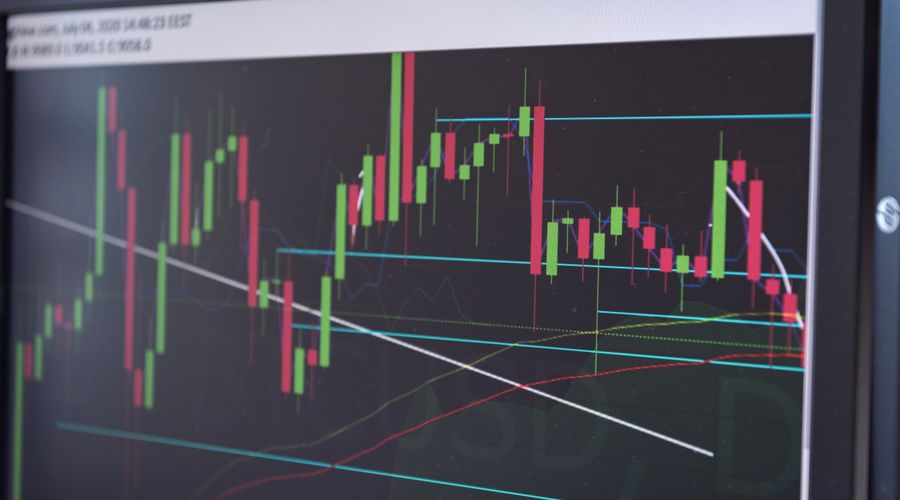
Photo by AlphaTradeZone on Pexels
Supply and demand vs support and resistance
This question comes up constantly, so here is the clearest way I know to separate them.
Support and resistance are drawn at price levels where price previously reacted — a horizontal line through a swing low or swing high. They mark where something happened. They do not tell you why.
Supply and demand zones are drawn at the origin of a move — the base where institutional accumulation or distribution occurred before price departed. They mark where the cause sits, not just the effect. The zone often starts slightly behind the visible swing high or swing low, because the accumulation happened before the final departure.
In practice: if a support level holds three times, a supply and demand trader would note that the first touch was the most reliable (freshest institutional interest) and that each subsequent touch is a lower-quality trade. The support line itself does not encode that information. The zone framework does.
The two approaches are not mutually exclusive. Many traders use support and resistance as a quick structural map, then look for supply and demand zones within that structure to refine entries. Order blocks — the more granular entry tool — sit within or at the edge of supply and demand zones, providing a tighter entry with a smaller stop. The three tools work at different resolutions of the same underlying reality.
One candlestick formation worth noting in this context: the last candle before a large impulsive move is often a significant indicator of zone validity. In candlestick analysis for forex, a small-bodied indecision candle (a doji or near-doji) as the final base candle before a sharp departure suggests maximum uncertainty before a decisive institutional push — a higher-quality setup than a zone that formed from a series of medium-range candles.
When supply and demand trading is the wrong tool
This is the section most trading guides skip because it does not help sell a course. I would rather you know when not to use this approach.
In strongly trending markets
When a currency pair is in a clear, sustained trend, demand zones in a downtrend and supply zones in an uptrend get broken repeatedly. You can mark beautiful zones that fail one after another because the underlying institutional bias has shifted direction. A zone-based approach works best in ranging or moderately trending conditions. If you are fighting a Daily-timeframe trend with zone trades, you will be right occasionally but wrong systematically.
On zones with three or more previous tests
A zone that has been tested four times has the structural integrity of a day-old croissant. It looks solid from a distance. Apply any pressure and it collapses. The pending institutional orders that made the zone significant have largely been absorbed through the earlier tests. What remains is a price level that retail traders are watching, not institutional order flow — which is a different and considerably less reliable thing.
In the 30 minutes around major news releases
A zone drawn at a technical level provides no protection against a fundamental shift. If the Federal Reserve surprises with a rate decision, price moves through zones as if they were suggestions, not structure. Placing a trade into a zone 15 minutes before a major data release is not discipline — it is optimism wearing a strategy's clothing.
On low timeframes during high-volatility sessions
M5 and M15 zones during the London-New York overlap are not institutional structure. They are noise generated by high-frequency order flow and large retail volume competing in a tight window. The zones form and fail rapidly because there is no patient institutional accumulation at those resolutions — just speed. Save the zone approach for H4 and above, or use it only to refine entries within a higher-timeframe zone.
For traders who want a mechanical system
Supply and demand trading requires judgment at every stage: which moves were genuinely impulsive, which bases were tight enough, which zones are fresh. If you want a system where you apply fixed rules and get a fixed outcome, this is not it. Two traders looking at the same chart can mark different zones, both with valid reasoning. That subjectivity is not a bug — it reflects the genuinely discretionary nature of reading order flow. But it does mean this approach suits traders who are comfortable with ambiguity and have the experience to navigate it.
Frequently asked questions
What is supply and demand trading?
Supply and demand trading is a chart analysis approach that identifies zones where large imbalances between buyers and sellers previously caused a sharp price move. Demand zones are areas where price moved sharply upward; supply zones are areas where price moved sharply downward. These zones represent places where institutional participants left unfilled orders. When price returns to a zone, those pending orders absorb incoming flow and cause the level to hold — at least until the orders run out.
How do you identify a demand zone in forex?
A demand zone is identified by finding a sharp, impulsive upward move and then locating the consolidation or base immediately before that move began. The zone is drawn around that base — typically from the lowest candle low to the highest candle close. Key criteria: the move away must be strong and impulsive (large candles, clear direction), the base must be tight (two to four candles at most), and the zone should ideally be fresh — price has not returned to it since the initial departure.
What makes a supply or demand zone valid?
Three things determine zone quality. First, the move away must be impulsive — a series of large candles moving decisively in one direction, not a slow drift. Second, the base should be tight: a compact consolidation of two to four candles, not a messy range that took days to resolve. Third, freshness matters enormously. A zone price has not yet revisited is far stronger than one that has been tested twice already, because each test consumes some of the pending institutional orders waiting there.
What is the difference between supply and demand zones and support and resistance?
Support and resistance are specific price levels where price previously reacted. Supply and demand zones are wider rectangles drawn around the base where a move originated — not just the reaction point. Supply and demand trading focuses on where the move came from, not just where it reversed. This means the zone often starts slightly away from the visible swing high or low. In practice, order blocks sit within or at the edge of supply and demand zones, providing a more precise entry within the broader area.
Do supply and demand zones work in forex?
Yes, supply and demand zones work in forex — with the qualification that higher timeframes produce more reliable zones than lower ones. On H4 and Daily charts, fresh zones with strong impulsive departures regularly produce meaningful reactions. On M5 and M15, the failure rate is higher because retail order flow, not institutional activity, generates most of the structure at those resolutions. Zones provide a probabilistic edge over time. They do not guarantee any individual trade.
How many times can a supply or demand zone be tested before it loses validity?
A supply or demand zone weakens with each successful test. The first return to a fresh zone typically produces the strongest reaction, as the full pool of unfilled orders is available to absorb price. By the second or third test, many of those orders have been filled, reducing the zone's holding power. Most practitioners consider a zone significantly degraded after two tests and invalid after three. Some traders discard a zone entirely after its first test on the basis that the edge was already consumed.
What timeframe is best for supply and demand trading?
H4 and Daily charts produce the most reliable supply and demand zones because they reflect genuine institutional order flow — the kind that leaves a meaningful imprint on price. Weekly and Monthly zones carry even more weight for longer-term positioning. Lower timeframe zones (M15 and below) still form, but the signal-to-noise ratio drops significantly. The standard approach is to identify the zone on H4 or Daily, then drop to H1 or M15 to refine the entry within the broader zone.
Marco has traded forex from London since 2009, working predominantly with H4 and Daily supply and demand structure on major pairs. He coaches individual traders and small prop firm cohorts, focusing on reading order flow rather than reacting to price. He has drawn more supply and demand zones than he has answered emails — his inbox is itself a supply zone of unread messages that nobody has ever successfully traded.
Start Seeing What's Really Moving Price
Most traders react to price. Learn to read what drives it.
See how Rethink Forex works