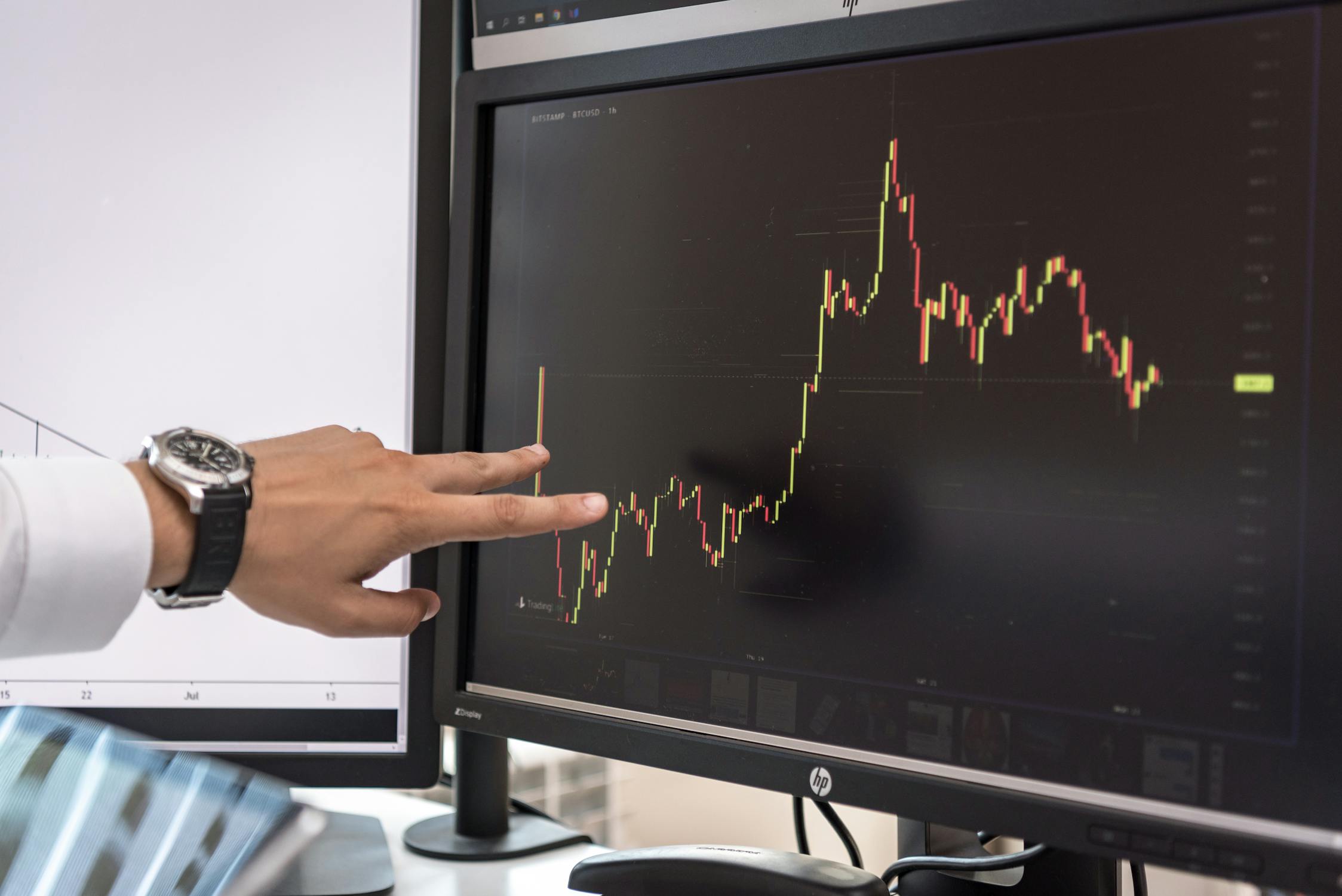
Photo by AlphaTradeZone on Pexels
Risk ManagementTrading Calculator: The Number Most Traders Never Run
Key answer
A trading calculator computes four numbers before every trade: position size, pip value, margin requirement, and potential profit or loss. Used in the correct order — position size first — it forces you to define your risk before your entry, not during it. The calculation itself is not complicated. The discipline of running it before every single trade, without exception, is where most retail traders fall short.
The trade that went right and still cost you
A trading calculator is exactly what it sounds like. Which does raise the question of why so many retail traders make their biggest financial decisions without one. My apprentice told me he calculated his position size once. He used his thumb. (I did not ask him to clarify.)
You have probably had this experience: the direction was right, the analysis was right, the trade eventually moved your way — and the P&L still looks wrong. More damage than the setup should have caused, or a profit smaller than the move warranted. What usually happened is the position size was wrong. Not the entry. The size.
When position size is set by feel — by how confident the setup looks, by how much the account has lost recently, by what feels right in the moment — the trade outcome stops being determined by the analysis and starts being determined by the emotion that set the size. The two are related, but they are not the same decision. Treating them as one is where the bleeding starts.
The single most common path to a blown account is not a catastrophically bad trade. It is the right strategy applied repeatedly with position sizes that did not survive a normal losing streak. The calculator does not stop losing streaks. It stops the sizes that turn losing streaks into account-ending events.
Retail forex education teaches entries. It teaches exits. It rarely teaches the moment before the entry — the calculation that sets how much every pip of movement is worth to your account, determined by risk percentage and stop distance rather than by how the chart looks.
What a trading calculator actually does
A forex trading calculator is not one tool — it is four, each answering a different question about the trade you are about to take.
The brokers and platforms that include calculators tend to present them as a convenience, something to check margin or confirm a pip value when curious. That framing gets the purpose backwards. The calculator is not a reference tool you consult after you decide to trade. It is a decision-making tool you run before you decide whether to trade at all.
The BIS Triennial Survey puts daily forex volume at $7.5 trillion. The institutional participants behind that volume calculate position size before they evaluate entries. Size is set by the risk budget. The entry is then evaluated against what that budget allows. Not the other way around.
Retail traders tend to work in reverse: spot the entry, decide to trade, then pick a size that feels proportionate to how good the setup looks. The calculator, used correctly, reverses that order — and reversing that order changes the outcome more than changing the entry ever will.
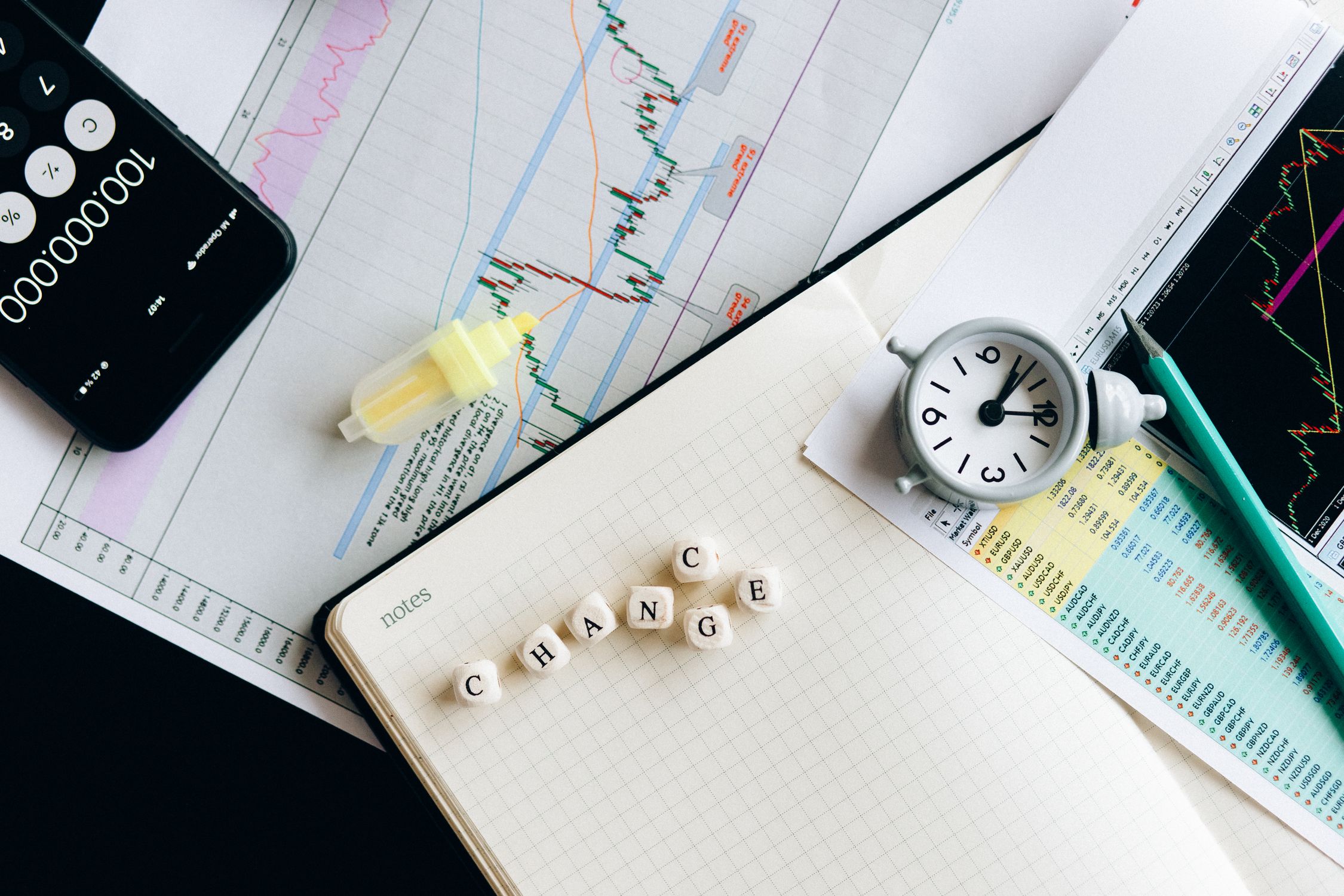
Photo by Nataliya Vaitkevich on Pexels
The four calculations every forex trader needs
1. Position size calculator
This is the most important calculation, run first. Inputs: account size, percentage of account to risk on this trade, stop loss in pips, currency pair, and account currency. Output: the number of lots (standard, mini, or micro) that makes a hit stop loss cost exactly the risk amount you specified — no more.
The formula behind it: (Account size × Risk %) ÷ (Stop loss in pips × Pip value per lot). Run this first, before you look at the chart again. Position sizing is the one variable within your control in every trade — not the entry, not the stop, not the market. The size.
2. Pip value calculator
Pip value tells you what one pip of movement is worth in your account currency, at your chosen lot size. It varies by pair because it depends on the counter currency exchange rate. On EUR/USD with a GBP account, one pip on a standard lot is worth approximately £8.50 — but that changes daily as EUR/GBP moves.
Most position size calculators include pip value in their output. Understanding what the number means in practice — "every pip this trade moves against me costs £4.25 at this lot size" — makes risk-reward ratios (RR) concrete rather than abstract. A 1:2 RR on a 15-pip stop means £63.75 at risk for a £127.50 target, at this account size, today. That specificity is what the calculator provides.
3. Margin calculator
Margin is the capital your broker holds while your trade is open. At 30:1 leverage on EUR/USD, a standard lot requires approximately £3,333 in margin. The margin calculator tells you whether opening this trade, at this size, leaves enough free margin in your account to absorb normal drawdown without triggering a margin call.
Running the margin calculation before entry is particularly important if you hold multiple positions. Three trades open simultaneously can tie up significant margin, and a drawdown on one position reduces the free margin available to hold the others. The calculator makes this visible before it becomes a problem.
4. Profit and loss calculator
Once position size is set, the profit/loss calculator takes your entry price, stop loss, and take profit level and tells you exactly what a winning and losing trade is worth in account currency. This is the validation step: does the setup, at this position size, produce a risk-reward ratio worth taking?
A setup with a wide stop loss and a nearby target might look clean on the chart and still produce a 1:0.7 RR when calculated. The calculator reveals that before you enter — not after you lose the trade and wonder why the numbers did not add up.
The correct order of operations
Position sizing. The phrase sounds responsible. It is responsible. It is also the thing most retail traders do after they have already decided how much they want to trade — which is the opposite of the correct order of operations.
The correct sequence before entering any spot forex position:
- Define the stop loss first — not after looking at the chart, but as the first question. Where, structurally, is the setup wrong? That level is your stop.
- Run the position size calculator — with your actual account size, 1–2% risk, and the stop distance just defined. This gives your lot size. Not your gut's lot size. The calculated lot size.
- Check pip value — confirm what each pip is worth at this lot size, so RR targets are in real money, not pip abstractions.
- Check margin — confirm you have sufficient free margin to hold this position through normal adverse movement without a forced close.
- Validate RR with the profit/loss calculator — if the risk-reward does not make sense at this calculated size, the setup does not make sense. Walk away.
I used my gut for position sizing for the first two years of trading. I am telling you this as someone who survived that period, not as someone who has only ever done it right. The calculator was always there. Running it first was the discipline I had to build separately from everything else I was learning.

Photo by Alesia Kozik on Pexels
What the numbers reveal before you enter
You might reasonably ask: "I can find this on YouTube. I know how to use a pip calculator. Why should I trust you on this?" The honest answer is: you probably do know how to use one. The question is whether you run it before every single trade, without exception. Most traders watch the tutorial and feel informed. Then they go back to estimating.
Running the trading calculator before pulling the trigger produces three things that gut-based sizing cannot:
- It makes risk concrete. "One percent of my account" is abstract. "£97.50" is not. The calculator converts percentage risk into real money, which changes the emotional register of the decision. You are not risking 1%. You are risking £97.50 on this specific setup, on this specific day. Knowing that precisely before entry is different from knowing it approximately.
- It forces a stop loss before entry. You cannot run a position size calculator without inputting a stop loss. The discipline of defining the stop before calculating the size means the stop is structural — placed where the trade is wrong — rather than set to a distance that produces a comfortable loss in case it is hit.
- It validates the setup before capital is committed. A setup that produces an unattractive RR at the correct position size is a setup that should not be taken. The calculator surfaces this before entry, not after a losing trade. Many setups that look clean on the chart — with the right entry and reasonable stop — do not survive the systematic pre-trade check. That is useful information.
The FCA data on retail trading consistently shows that between 70% and 80% of retail accounts lose money. The calculator does not change that number by itself. But the discipline of calculating before every entry — rinse, repeat, without exception — is one of the clearest structural differences between traders whose accounts survive and traders whose accounts bleed out over several months of otherwise correct analysis.
Moving a stop to B/E (breakeven) after a trade goes in your favour, scaling into a winning position, managing a position through volatility — all of these decisions are easier and less emotional when you knew your pip value before you entered. The calculator is not a trading strategy. It is the floor under every trading strategy.
When the calculator is not your priority yet
If you are still in the early stages of learning to read price — still figuring out what a setup looks like, still working out timeframes, still unclear on basic market structure — the calculator is not your most urgent problem. Calculating a precise lot size for a trade you do not yet know how to evaluate is a well-organised version of the wrong problem.
What you need first is an honest understanding of why most retail traders lose money — not from insufficient calculation, but from insufficient understanding of why price moves the way it does. Rethink Forex is not the right starting point if the goal is to find a strategy that works and then apply correct position sizing to it. That is not the gap. The gap is the understanding of what drives price — which no calculator addresses.
The calculator matters enormously once you have a coherent approach to entries and exits. Before that, it is the right tool in the wrong sequence.
Frequently asked questions
What is a trading calculator?
A trading calculator computes four numbers before you enter a trade: position size, pip value, margin requirement, and potential profit or loss. Used in the correct order — position size first — it forces you to define your risk before your entry, not during it. The calculation itself is not complicated. Running it before every single trade, without exception, is the discipline that matters.
How do I calculate position size in forex?
Position size is calculated as: (Account size × Risk %) ÷ (Stop loss in pips × Pip value per lot). A £10,000 account risking 1% with a 20-pip stop on EUR/USD gives a risk amount of £100. If one pip on a standard lot is worth approximately £8.50, the correct lot size is roughly 0.59 lots — not one standard lot because that "feels about right." A position size calculator automates this, but understanding the formula tells you why stop loss distance and pip value both directly determine how many lots you can trade.
What is pip value and why does it matter?
Pip value is the monetary amount one pip of price movement is worth, based on your lot size and account currency. On EUR/USD, one pip on a standard lot is worth approximately £8.50 for a GBP account at current EUR/GBP rates. Knowing your pip value before you trade means you know exactly how much each pip of adverse movement costs in real money — rather than discovering it after the fact on a trade that moved more than you expected.
How much margin do I need to open a trade?
Required margin depends on lot size, currency pair, and your broker's leverage. The formula is: Trade value ÷ Leverage. A standard lot of EUR/USD at 30:1 leverage requires approximately £3,333 in margin. Checking margin before trading tells you whether you have enough free margin to hold the position — and whether opening it would leave you dangerously close to a margin call on a normal-sized drawdown.
What is a forex lot size calculator?
A forex lot size calculator is a position size calculator designed for currency pairs. You enter account currency, account size, risk percentage, stop loss distance in pips, and the pair. It outputs the correct number of lots so that a hit stop loss costs exactly the risk amount you specified. The calculator removes guesswork from the most consequential pre-trade decision.
Should I use a trading calculator before every trade?
Yes — before every trade, without exception. The discipline of running the calculator before entry is more valuable than the output. It forces you to define your stop loss before you trade, sets risk in real monetary terms rather than pip abstractions, and prevents emotional position sizing where the size reflects how confident you feel rather than what the risk budget allows. Professional traders set position size before evaluating the entry. The calculator is how you enforce that order.
What is a good risk-to-reward ratio for forex?
A risk-to-reward ratio (RR) of 1:2 or higher is commonly cited as a minimum for a sustainable forex approach — targeting at least twice as much profit as your maximum risk. However, the ratio only matters when applied to a correctly calculated position size. A 1:3 RR trade with an oversized position can still damage an account if the risk amount exceeds what the account can absorb over a losing streak. RR and position sizing are two sides of the same calculation.
About the author
Marco Stavros has traded forex from London since 2009. He used gut-based position sizing for his first two years of trading and survived it — narrowly. He has worked with retail traders since 2017, focusing on the decisions made before entry: position size, stop placement, and whether the setup survives a systematic check rather than an emotional one. Run the calculator. All four of them. In that order. If the numbers still work, you might have a trade. If they don't, you've just saved yourself a very expensive lesson — and a very quiet Tuesday evening.
Start Seeing What Is Really Moving Price
Most traders react to price. Learn to read what drives it.
See how Rethink Forex works