
Photo by Pixabay on Pexels
Trading Floor: Why the Chaos Was Never the Point
Quick Answer
A trading floor is the physical space where an exchange used to match buyers and sellers by open outcry: brokers shouting bids and offers, in the open, so the best price won. Almost all of that has now moved into electronic order books that run the same auction rules in software. The floor disappeared. The logic it ran on did not.
Say trading floor to most people and they picture the same scene: a pit full of men in loud jackets, waving hands, screaming numbers, somebody fainting in a film about the 1980s. Say it to me and I picture my kitchen table, a laptop at 60% brightness because the sun still has not come up, and total silence except the kettle. (I have checked. There is no dress code for either.) That gap between the image and the reality is not a coincidence, and understanding why it exists tells you something genuinely useful about how your own trades get filled.
This post is not trading trivia for its own sake. The pit and the screen in front of you right now are running the exact same set of rules. Once you see that, a lot of what feels like invisible institutional magic stops looking like magic.
The picture in your head versus the laptop in front of you
Every retail trader carries around a mental image of "the market" that has almost nothing to do with how they actually trade it. The market, in the popular imagination, is a room. It is loud, physical, adrenaline-soaked, full of people who look like they know something you do not. Your actual experience of the market is a chart that updates in silence, a spread that widens for no announced reason, and a stop that gets hit five pips before price turns around exactly the way your analysis said it would.
That mismatch is disorienting in a specific way. It quietly implies that the "real" trading is happening somewhere else, in a room you are not in, by people who are shouting something you cannot hear. Sure, heard that conspiracy before — institutions in a back room moving price against you. It is a satisfying story. It is also not what a trading floor was, and not what replaced it.
It was never actually chaos
Here is the part the films leave out: the shouting was the system working correctly, not the system breaking down. A trading pit was a live double auction. Every bid and every offer had to be made out loud, in the open, where every other broker present could hear it, match it, or beat it. Nobody could quietly agree a worse price with a friend in the corner. The noise was the mechanism for price discovery, not a symptom of it failing.
It is a good pun waiting to happen and I am not going to resist it: the pit was never a bottomless hole your order fell into. It was closer to the opposite — the most transparent room in finance, because every price had to survive being shouted in front of a hundred competitors before it counted.

Photo by AlphaTradeZone on Pexels
How the shouting actually worked
Brokers on the floor held their client's orders in confidence, so only they knew what a customer actually wanted at any moment. When a broker had an order to fill, they announced price and size to the pit using their voice and a set of hand signals that carried over the noise. Palms facing the broker meant buy, palms facing out meant sell, fingers held vertically or horizontally indicated size and price. Anyone in the pit could accept the best bid or offer on the floor, and better prices had to be called out to genuinely compete.
A clerk sat above the pit recording every trade as it happened, translating shouted instructions and hand signals into a paper record in real time, in a room moving fast enough that the accuracy of that record depended entirely on the clerk's skill. It was a genuinely well-designed system for its era. It was also completely dependent on human bandwidth, which is exactly the constraint that ended it.
Why the floors disappeared, and how fast
The end, when it came, came quickly and more than once. On 27 October 1986, the London Stock Exchange launched electronic trading in what became known as the Big Bang. The plan was for the new screens to run alongside the existing floor. Within weeks, almost nobody was using the floor at all. One former floor trader described walking in that Monday to find a room that had been packed the previous Friday sitting in what he called a complete hush.
Chicago held on considerably longer, in part because futures and options pits handled more complex, harder-to-automate order types than a simple stock trade. CME Globex, the electronic platform that eventually changed that, launched on 25 June 1992, built on Reuters technology after a roughly $75 million investment, initially handling little more than a single treasury note contract and a handful of currency products overnight while the pits ran during the day. It was not built to compete with open outcry. It just kept getting used more, year after year, until it was the market.
By 2020, CME had closed almost all of its remaining Chicago pits, ending a 172-year run of open outcry trading in that city. NYMEX had already ended its own floor trading in 2016. Electronic trading now accounts for more than 80% of CME Group's average daily volume. The pit did not lose an argument. It lost a bandwidth problem, to a system that never sleeps and never needs a clerk to keep up.
The same auction, now running in software
Here is the belief worth sitting with: what replaced the floor is not a different kind of market. It is the identical double auction, running in software instead of lungs. An electronic order book still stacks bids on one side and offers on the other. Orders still get matched by price first, then by time, exactly the priority a shouted "better price" enforced in the pit. There is still, functionally, a floor. It just lives in a data centre rather than a room with a dress code.
My apprentice, when I first explained this to him, asked the obvious question: if it is the same auction, why does it feel so much less readable on a retail screen than it apparently was to a broker standing in the pit. Good question, and the honest answer is that it is not less readable, it is differently visible. A floor broker read size by watching where the crowd leaned. A modern trader reads it by understanding where liquidity actually sits on the order book, and why order flow clusters at specific levels rather than being scattered evenly across the chart. Same information. Different instrument for detecting it.
Why this actually matters for your trades
I can already hear the next objection: interesting bit of history, Marco, but so what, this is not going to fix my losing week. Fair. Here is the so-what. Because the auction logic never actually changed, the same footprints a floor broker used to read off the crowd are still readable in the order book today — resting liquidity, imbalances between stacked bids and offers, price reacting at levels where size is genuinely sitting rather than at some arbitrary round number.
Retail trading tools mostly show you price action after the fact: a candle has closed, a line has been crossed, an indicator has confirmed. That is the modern equivalent of hearing the shout after the trade has already happened. It reacts late by design, which is precisely why a stop can get hunted and hit moments before the market reverses in the direction your analysis called correctly all along. Understanding this is not conspiracy thinking. It is just correctly locating where the actual auction is happening, and reading the level, not the lagging confirmation of it.
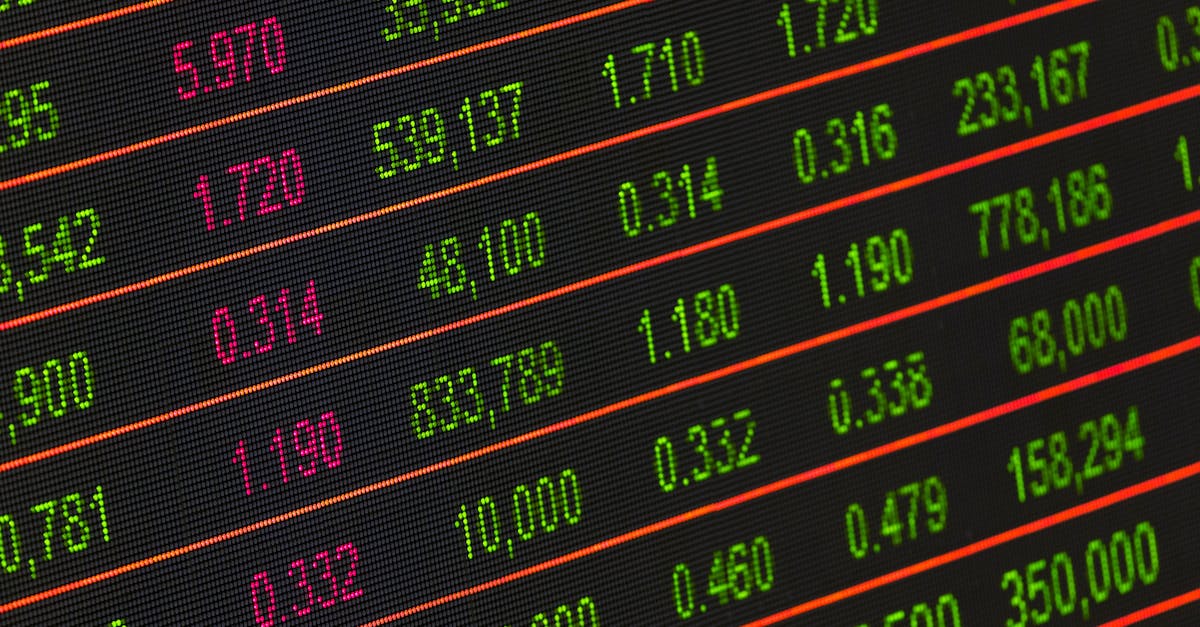
Photo by Pixabay on Pexels
None of this means you were doing something wrong by not knowing it. Almost nobody teaching retail traders starts here, because a candlestick pattern is a much easier thing to sell than an explanation of institutional order flow. You were not undisciplined or slow. You were taught to watch the confirmation instead of the auction that produced it.
Who still needs an actual floor
To be fair to the pit: it has not vanished entirely, and pretending otherwise would be its own kind of dishonesty. Cboe still operates what it calls the world's largest options trading pit, in Chicago, deliberately blending open outcry with electronic systems rather than replacing one with the other outright. Complex, multi-leg options orders are genuinely one of the few order types where a human standing in a crowd, reading nuance a screen still cannot capture, earns its keep.
That is a narrow, specialist case. If your trading is retail spot forex or CFDs, which almost every reader here is, you were never going to encounter an actual pit, and nothing about your setup or your losses had anything to do with missing one. The lesson to take is the auction logic, not a longing for a room that was already emptying out before most of us were trading.
Frequently asked questions
What is a trading floor?
A trading floor is the physical area of an exchange where buyers and sellers meet to trade. Historically this meant open outcry: brokers standing in a pit, shouting bids and offers and using hand signals to agree a price. Most major exchanges have since replaced this with electronic order-matching systems.
Do trading floors still exist?
A handful remain, but they are the exception. Cboe still runs the world's largest options trading pit in Chicago, blending open outcry with electronic systems. Most others are gone: CME closed almost all of its Chicago pits in 2020, and NYMEX ended open outcry in 2016.
Why did trading floors close down?
Not because the auction they ran was flawed, but because software runs the identical auction faster, cheaper, and for longer hours. Electronic order books match bids and offers by price and time priority, the same rule shouted brokers used, without needing hundreds of people in one room.
What is open outcry trading?
Open outcry is a face-to-face auction method where brokers verbally shout, and signal with their hands, the price and size they want to buy or sell at. Every bid and offer had to be made publicly, in the open, so any other broker in the pit could match or improve it.
When did the London Stock Exchange close its trading floor?
On 27 October 1986, known as the Big Bang, the London Stock Exchange introduced electronic trading. The old floor was meant to run alongside it. It was abandoned within weeks because almost nobody was using it, a transition one former floor trader described as going from a packed room to a complete hush overnight.
Is CME Globex still used today?
Yes. CME Globex launched in June 1992 and now handles more than 80% of CME Group's average daily volume. It was built to run alongside the pits, not replace them immediately, but the shift toward electronic trading proved one-directional.
Does the trading floor matter for retail forex traders?
The room is gone but the logic is not. Modern electronic order books run the same price-time priority auction the pit ran, which is why resting liquidity and order flow still leave visible footprints today. Understanding that logic explains far more about your fills than knowing where a pit used to stand.
Marco Stavros has traded forex from London since 2009. He has never stood in a pit, shouted a price, or worn a coloured jacket to work, and has still spent most of his career reading the same auction logic those brokers once shouted, just on a screen instead. Learn more about Marco.
Start Seeing What's Really Moving Price
Most traders react to price. Learn to read what drives it.
See how Rethink Forex works