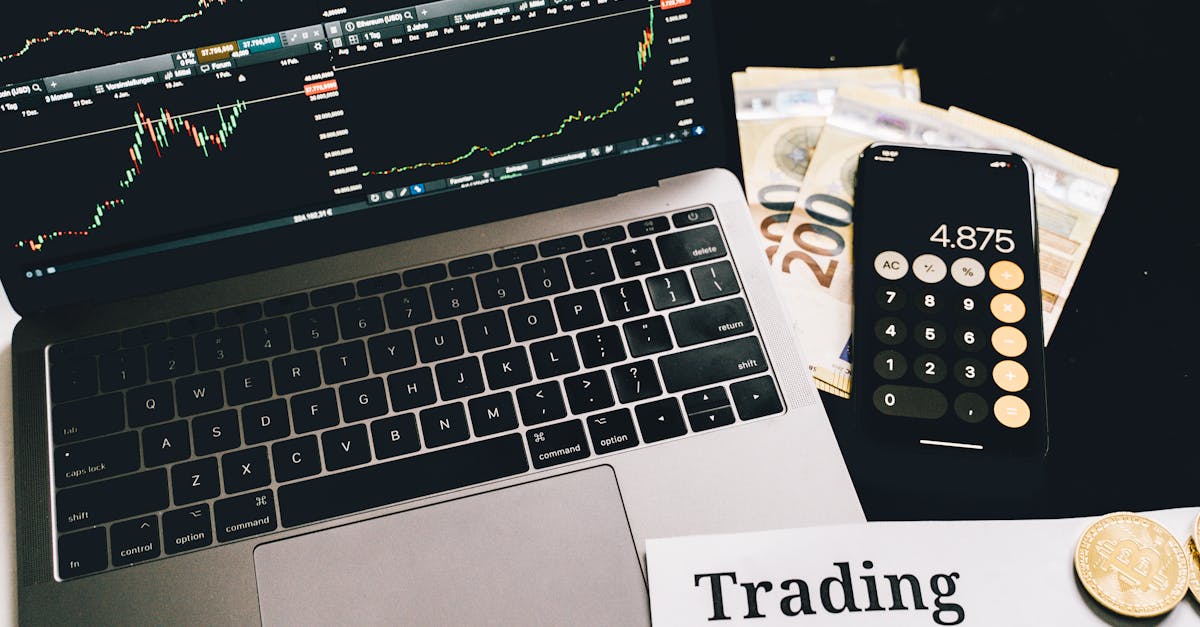
Photo by Alesia Kozik on Pexels
Forex Trading for Dummies: What the Guides Get Wrong
The market has been happily taking money from people with degrees, decades of experience, and more indicators than a cockpit since before most of us knew what a pip was. (A pip is the smallest price movement in forex, by the way. It sounds like what happens when you drop a grape on the kitchen floor. It is not. But the confusion at the start is understandable.)
If you searched "forex trading for dummies" today, you are in one of two situations. You are genuinely new and want to understand what this is before committing time or money. Or you have already tried — read the guides, watched the videos, followed the signals — and still cannot understand why your analysis keeps being right while your account keeps bleeding. The trade looked perfect. The setup matched the tutorial. And then it did not work.
There is a meaningful difference between being a dummy and being mis-educated. This post is for the second group, even if you are technically in the first. Because the same thing that produces the second situation is baked into almost every beginner resource — and knowing what it is changes everything about how you approach this.
The direct answer
Forex trading is the buying and selling of currency pairs on the foreign exchange market — the largest in the world, with over $7.5 trillion traded daily. You speculate on whether one currency will rise or fall against another.
The mechanics are simple to learn. What most "dummies" guides do not teach is why price moves the way it does. Without that, the mechanics produce losses regardless of how well you execute them. That gap is what this post covers.
What is forex trading, actually?
Forex — short for foreign exchange — is the market where currencies are bought and sold. Unlike the stock market, there is no central exchange. Forex operates across a global network of banks, brokers, institutions, and retail traders, running 24 hours a day from Sunday evening until Friday night.
Everything in forex is traded in pairs: EUR/USD, GBP/USD, USD/JPY. The first currency in the pair is the one you are buying or selling; the second is what you are measuring it against. When you buy EUR/USD, you are buying euros and selling dollars. When the euro rises against the dollar, you profit. When it falls, you lose.
My apprentice asked me once if "forex" was short for something. I told him it was short for "foreign exchange." He nodded slowly, as if that settled it. It did not, and that is the whole point of this post — the surface explanation gives you the words without giving you any understanding of what is actually happening.
The mechanics of forex are genuinely straightforward to learn. Open an account, download a platform, place a trade. Most people can do this in an afternoon. What takes significantly longer — and what most beginner guides underestimate — is understanding why those trades should or should not be placed in the first place.
Why most beginners keep losing despite doing everything right

Photo by RDNE Stock project on Pexels
The pattern goes like this. You find a beginner guide. You learn the basics — what pips are, how lots work, what leverage does. You learn a strategy: look for this pattern, wait for this signal, enter here, put your stop there. You try it on a demo account. It seems to work. You go live. The account bleeds.
You add more indicators. You try a different strategy. You read another guide. You find a YouTube channel with more detailed signals. The pattern repeats. Rinse, repeat. Nobody selling the next course benefits from you noticing this cycle.
The most common experience at this stage is a specific and maddening one: my analysis was right but I still lost. The pattern appeared exactly as described. The entry signal fired at the right moment. The trade went the wrong way anyway. The stop got hit. Then, infuriatingly, price reversed and went in the direction you expected.
This is not bad luck. It is not a coincidence. And it is not evidence that you are a dummy. It is evidence that you are using tools that were designed to describe price behaviour after the fact, in a market that is shaped by participants who move before those tools fire.
The problem is not your execution. The problem is the framework you were handed.
What the standard guides leave out
Everything in a standard forex for dummies guide is available for free on YouTube. That is not the problem. The problem is that the information available — for free or paid — is built on the same set of assumptions that produce the results described above. More of the same information, delivered better, is not the answer.
Here is what the standard approach does not teach:
Context, not just entry signals
Most beginner guides focus almost entirely on entries. When RSI crosses 30, buy. When price breaks above resistance, enter long. When the moving average crosses, act. What none of these guides adequately explain is why those signals matter in some situations and are meaningless in others. That is a context problem. The entry is never the real decision. The decision is whether the conditions exist for that entry to have a meaningful probability of working.
Building a real trading system starts with understanding context — where price is, what happened before, what level it is reacting from, and why. Entries without context are guesses with technical dressing.
Why stops keep getting hit
Beginner guides tell you to put your stop loss at a recent swing low, or just below a support level. This is sound risk management advice. What the guides do not explain is that stop losses clustered at obvious technical levels are visible to participants with significantly more capital than a retail trader — and that those levels are, predictably, where price tends to reach before reversing.
The experience of being stop hunted — to the pip, and then watching price reverse in your original direction — is so common that the retail trading community has a phrase for it. It is not a conspiracy. It is a structural feature of how liquidity in the market gets consumed. Understanding it changes where you place stops and when you enter.
What risk management actually involves
Most guides cover the 1–2% rule: never risk more than 1–2% of your account on a single trade. That is correct and worth following. What they rarely explain is that forex risk management also involves position sizing, correlation between pairs, managing open trades under changing conditions, and knowing when not to trade at all. The number alone, without the context of when and why to apply it, produces the right percentage applied to the wrong trades.
Why price actually moves — the part nobody explains

Photo by AlphaTradeZone on Pexels
The market does not move because RSI crossed 70. It does not reverse because a moving average crossed. Those are descriptions of what price has already done — reflections in a mirror, not the thing itself.
Price moves because of the participants inside the market. At scale, those participants are banks, hedge funds, central banks, and large institutional traders — entities managing positions measured in hundreds of millions or billions. Their orders move price in ways that create the patterns retail traders then try to trade.
Understanding order flow — how large orders enter the market, where they are placed, and what the resulting price behaviour looks like — is the layer of the market that most retail beginner guides never reach. It is also the layer that explains the majority of the experiences that most bewilder new traders: why stops get hit before reversals, why breakouts fail, why the "obvious" trade almost never works.
What this means in practice
Retail tools — RSI, MACD, Bollinger Bands, standard moving averages — fire entry signals at the exact moment institutional participants have already completed their activity. By the time the indicator tells you to buy, the buyers with the volume to move price have already bought. What follows is not continuation. It is the natural reversion that occurs after large supply or demand has been absorbed.
This is not the market being rigged. It is the market working exactly as it is designed to. The issue is that the retail framework describes the market as if it is driven by patterns on a chart, when in reality the patterns on the chart are the result of something deeper. Understanding supply and demand in trading through an institutional lens — where real orders exist and why — is the foundational shift that separates the retail experience from a more durable approach.
I followed the standard guides. I lost money with them. Not because I did not try hard enough. Because they described the right techniques in a context that did not match how the market actually functions. The shift came when I stopped asking "what is the signal?" and started asking "who is moving this price and why?"
The forex concepts worth learning first
If you are genuinely starting from scratch, here is what is worth understanding before you think about strategies or entries:
How the market sessions work
The forex market has three major sessions: Tokyo, London, and New York. The overlap between London and New York produces the highest volume and the cleanest price movement. Most meaningful price activity in the major pairs happens during these windows. Trading outside them, particularly during the Asian session on pairs like GBP/USD, is a very different experience — and not a better one for beginners.
What pips and lots actually mean
A pip is the fourth decimal place in most currency pairs. On EUR/USD, a move from 1.0850 to 1.0851 is one pip. A standard lot is 100,000 units of currency. A mini lot is 10,000. A micro lot is 1,000. Most retail brokers offer fractional lot trading, which is how you can control your position size relative to your account size. This is the mechanics — not unimportant, but not where most beginners need to spend their time first.
What leverage actually does to your account
Leverage allows you to control a larger position than your account balance would otherwise permit. In the UK, the FCA caps retail leverage at 30:1 on major pairs. What every beginner needs to understand before using leverage is that it multiplies losses at exactly the same rate it multiplies gains. An account with 30:1 leverage on the wrong side of a 1% move loses 30% of its capital in a single trade. Leverage is the single most common reason beginner accounts blow up faster than the trader expected.
Price action — reading the chart without the clutter
Price action is the study of what price itself is doing — without indicators layered on top. Where did price come from? Where did it pause? Where did it reverse, and why might it reverse there again? Learning to read a clean chart builds an understanding of market structure that indicator-heavy approaches actively obscure. Most traders who eventually develop consistency remove most of their indicators before they start improving, not after.
How to start forex trading without the usual mistakes
The mechanics of starting are simple. The sequencing of what you learn matters more than any specific step.
- Choose a regulated broker. In the UK, FCA-regulated brokers are the only ones worth considering. Check the FCA register before depositing anything. The broker matters for execution, spreads, and platform — not for whether you make money. You determine that.
- Start on a demo account and stay there longer than you think you need to. Demo trading is not the same as live trading — the emotional conditions are completely different. But it is where you develop mechanical fluency with the platform, and it is where you discover whether your approach produces consistent results before money is involved. Most beginners move to live accounts too quickly. FOMO is not a good reason to fund a live account.
- Understand before you strategise. Most beginners look for a strategy before they understand the market. The result is a strategy without a foundation. Spend time learning what price is doing and why — not looking for the pattern that triggers an entry — before you build or adopt a formal approach.
- Learn what day trading forex actually involves before committing to it. Many beginners assume they will day trade because it sounds active and profitable. Day trading is the highest-frequency, highest-stress form of trading and has the steepest learning curve. Swing trading — holding positions for days rather than hours — is often a more practical starting point for people with day jobs and limited screen time.
- Keep a trade journal from day one. Not to track profits and losses — to track reasoning. Why did you enter? What did you expect? What happened? What do you understand differently now? The journal is not a performance review. It is the mechanism through which understanding compounds.
Who should wait before trading forex
Not everyone who searches "forex trading for dummies" should start trading forex. This is the part most guides skip entirely, for obvious commercial reasons.
If you are in financial difficulty right now, forex is not a solution. The market does not care about urgency. Trading from a position of financial pressure produces consistently worse outcomes than trading from stability, because the emotional stakes of each trade distort the decision-making that produces good trades. Waiting until your financial situation is stable before adding a high-risk speculative activity is not timidity — it is the correct sequence.
If you are expecting to replace your income in the first year, the data argues against you. Between 70% and 80% of retail traders lose money according to the disclosures FCA-regulated brokers are required to publish. The traders who eventually profit typically invested years of deliberate study before reaching consistency. A year-one income target applied to a market with these statistics is not a plan — it is hope.
If you are on tilt from a previous run of losses, do not start with live money. The emotional state that follows a series of losses — the drive to recover quickly, the willingness to over-leverage, the tendency to revenge trade — is the state in which the most damage is done. Demo trading until the emotional charge dissipates is not a step backward. It is how professionals manage risk.
If you are not willing to spend at least six months understanding the market before expecting consistent results, forex trading as most people describe it will not work. That is not a judgment on you — it is an honest statement about the timeline the market demands.
Frequently asked questions
What is forex trading for beginners?
Forex trading is the buying and selling of currency pairs on the foreign exchange market — the largest financial market in the world, with over $7.5 trillion traded daily. For beginners, the mechanics are straightforward: you speculate on whether one currency will rise or fall against another. What most beginner guides do not cover is why price moves the way it does — and without that understanding, the mechanics alone will not produce consistent results.
How much money do I need to start forex trading?
Most UK forex brokers allow you to open an account with £100–£500, and some have no minimum deposit. The honest answer is that the amount matters less than your approach. Start on a demo account until your approach is genuinely consistent, then fund a live account with an amount you can afford to lose entirely.
Can a beginner make money from forex trading?
Yes, but the data is sobering. The FCA requires UK brokers to disclose what percentage of retail clients lose money — that figure is typically between 70% and 80%. Beginners who approach forex trading as a skill to develop over years, rather than a quick income source, give themselves genuinely different odds. The traders who eventually profit have invested heavily in understanding before investing in trades.
How long does it take to learn forex trading?
Most traders who develop genuine consistency report two to four years of deliberate study and practice. The traders who claim to have learned quickly either got lucky early and confuse that with skill, or they are selling something. The honest timeline is long. The understanding, once built, is durable.
What is the best strategy for beginner forex traders?
The most useful thing a beginner can do is not find a strategy — it is build an understanding of what price is doing and why. Most beginner strategies describe what to do without explaining the conditions under which those things work. Starting with understanding rather than technique produces dramatically better long-term results.
Is forex trading profitable for beginners?
Rarely in the short term, and the data confirms this. Between 70% and 80% of retail forex traders lose money. The profitable beginner is rare. The profitable trader who spent years building genuine understanding is far less rare.
Marco has traded forex from London since 2009. He spent the better part of a decade following standard retail guides and losing money with them before understanding why. Rethink Forex exists to give the explanation that the guides leave out — not to sell the next system, but to build the understanding that makes systems unnecessary. More about Marco.
Start Seeing What's Really Moving Price
Most traders react to price. Learn to read what drives it.
See how Rethink Forex works