
Photo by AlphaTradeZone on Pexels
Forex Trading Techniques: What Works and What Most Traders Get Wrong
Published July 2, 2026 · Last updated July 2, 2026
The word technique has a reassuring ring to it. It suggests precision, a skill acquired over time, something that separates the person who has it from the person who does not. What it usually means in the forex world is: a method someone described in a YouTube video that worked for them three times in 2019. (The other twelve times are not in the video.)
There are real forex trading techniques that work. They are not secrets. They are not complex. The problem is not the technique itself — it is the order in which most retail traders make their decisions. Technique comes last. Most people start there. That sequencing error is where the blown accounts come from.
This post covers what the main techniques are, what each one actually demands, and — more usefully — the structural layer that makes any technique viable or not, which almost nothing you have read will have mentioned.
The Short Answer
Forex trading techniques are the specific methods traders use to identify setups, enter the market, and manage positions — scalping, day trading, swing trading, trend following, breakout trading, and price action reading are the most common. The technique itself is rarely the problem. Applying it without first establishing the structural context is. The FCA reports that 68–80% of retail CFD accounts lose money. That figure does not come from bad techniques. It comes from techniques applied at the wrong time in the wrong market conditions.
What a forex trading technique actually is
The words technique, strategy, and system are used interchangeably in most forex content. They are not the same thing.
- A strategy is the overall framework — which instruments you trade, which sessions, which timeframes, how much you risk per trade, what your rules are for sitting out.
- A technique is the specific execution method within that strategy — how you identify a setup, where you enter, and where you place your stop.
- A system is a strategy made mechanical enough to apply without continuous judgement calls — rules-based rather than discretionary.
Most trading content focuses on the technique and ignores the strategy layer it sits within. This is the equivalent of teaching someone a particular chess opening without explaining what phase of the game it applies to. The move might be technically correct. Without the broader game context, it loses anyway.
A technique also needs to be distinguished from a signal. A signal is the trigger — the thing that tells you when to pull the trigger on a position. A technique is the entire process of reading, preparing, and executing the trade. Retail trading education is almost entirely about signals. The technique is the harder part.
The main technique categories — honest descriptions
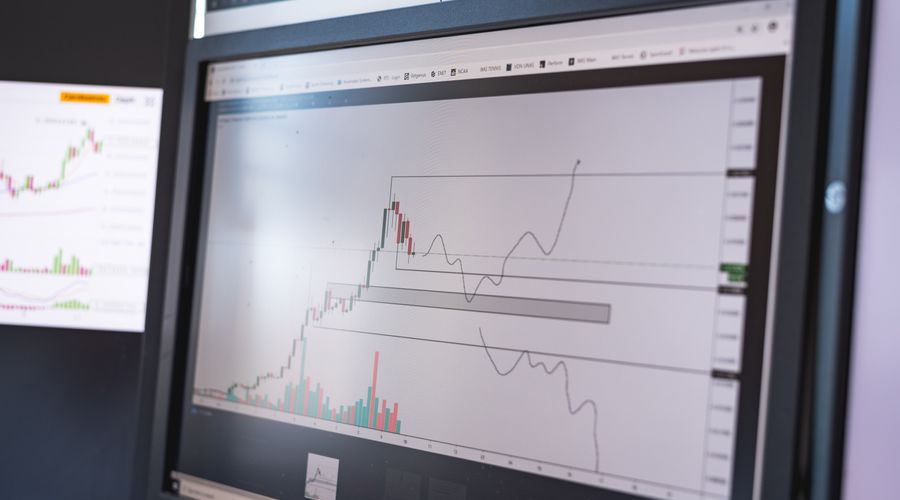
Photo by AlphaTradeZone on Pexels
These are the main forex trading technique categories. Each description includes what it actually demands — not just what it is.
Scalping
Scalping targets small price movements — typically 2–10 pips — held for seconds to minutes. A scalper might take 20–50 trades per session. It demands exceptional focus, fast execution, very low spreads, and the ability to absorb a high frequency of small losses without emotional deterioration. Scalping is the technique most beginners try first because the time commitment per trade feels low. The irony is that it is one of the most demanding techniques psychologically and one of the most expensive in terms of spread costs over time.
Day trading
Day trading involves opening and closing all positions within a single session. No overnight exposure. It requires active screen time during market hours — typically the London and New York sessions for forex — and a clear set of entry conditions that do not change based on how the session has gone so far. The second part is the problem for most day traders. The reality of day trading is that the technique is the easy part. The psychological consistency required to apply it without modification after three consecutive losses is the hard part.
Swing trading
Swing trading holds positions for one to five days, targeting larger moves — 50–200 pips — on the daily or four-hour chart. It is the most compatible technique with a full-time job because it does not require continuous screen time during market hours. The trade is planned, the stop and target are set, and the trader checks in once or twice a day. Swing trading suits people with patience and a tolerance for uncertainty — watching a trade float against you by 30 pips while waiting for the daily structure to play out requires a different mental model than day trading.
Breakout trading
Breakout trading enters when price moves beyond a defined level — a range boundary, a consolidation zone, or a key high or low. The theory is that a break of a significant level signals momentum in that direction. A breakout strategy waits for price to break key levels. It has this in common with many retail trading accounts. (Yes, that was a breakout pun. No, I will not apologise.) The practical problem with breakout trading is that false breakouts — price that breaches a level and immediately reverses — are the rule, not the exception, at levels where retail breakout orders concentrate.
Range trading
Range trading identifies price moving between defined support and resistance levels and sells the top, buys the bottom, repeatedly until the range breaks. Range trading is aptly named — spend enough time doing it and your emotions will cover a considerable range too. The technique works in genuinely ranging markets. The challenge is identifying when a market is ranging versus trending before committing to the range-trading approach, rather than after four consecutive stops.
Trend following
Trend following identifies the prevailing direction and trades in line with it. Buy pullbacks in an uptrend. Sell rallies in a downtrend. In theory, the most logical approach — go with the direction price is already moving. In practice, it requires the ability to define a trend correctly on the right timeframe and the patience to sit through the inevitable short-term moves against you before the trend resumes. Many traders define trends on too low a timeframe and get repeatedly stopped out by noise.
Technical analysis techniques: what retail traders actually use
Most of the technique categories above can be executed using two broad analytical approaches: indicator-based technical analysis, and price action reading. In practice, most retail traders start with indicators and eventually migrate to price action. The sequence usually looks like this.
They begin with a chart covered in RSI, MACD, Bollinger Bands, a few moving averages, maybe a stochastic oscillator. The indicators appear to work for a while. Then they stop working — or more precisely, they continue to signal what they always signalled, but the resulting trades stop being profitable. The trader adds more indicators, looking for the combination that will restore the edge. It does not restore. They simplify back down to two indicators. Then one. Then none.
Most experienced retail traders eventually arrive at price action because they have learned, through accumulated losses, that indicators are lagging by design. They are mathematically derived from price. They cannot tell you what price is about to do — only what it has already done. They fire entries after the move has started. In a liquid market where institutional participants move quickly, “after the move started” frequently means “after the people who moved it are already out.”
Price action removes that delay. Reading the raw chart directly — where price has reacted before, how it is structuring higher highs and lows or the reverse, how it behaves at key levels — gives you the earliest possible read on what is happening. It does not guarantee accuracy. Nothing does. It gives you the most current information available, rather than a processed version of information from three to fourteen bars ago.
The layer every technique guide skips

Photo by Burak The Weekender on Pexels
Every guide to forex trading techniques — including the three I looked at while writing this — describes what the techniques are. None of them address the layer that determines whether a technique produces results: the structural context it is applied within.
The most common frustration in retail trading is “my analysis was right but I still lost.” The trend signal was correct. The price action setup was clean. The trade was taken by the book. And then price went exactly to the stop before reversing in the original direction. The technique did not fail. Something else failed. That something else is structural context.
A textbook breakout trade — to use the most obvious example — places the stop just below the level that was broken. That level is also exactly where institutional participants concentrate their buying or selling to collect the liquidity they need before the real move begins. Retail traders place stops at the most visible levels on the chart. Those are the levels institutions target first. The stop gets taken out — the account gets stop hunted — and then price moves in the expected direction without the trader in it. The technique was correct. The timing was structurally wrong.
This is not unique to breakout trading. It happens across every technique category. And it is not a conspiracy — it is simply how a market works when one group of participants is significantly larger than another and needs liquidity to move. Retail traders are that liquidity source. Understanding this is not pessimistic. It is the thing that, once understood, changes how you read price entirely.
I can already hear the objection: “Every article about context says the same thing and none of them tell you what to actually look for.” Fair. Here is the specific checklist before applying any technique to any setup:
- What is the structural direction on the higher timeframe? — If you are trading the one-hour chart, what is the daily chart doing? If price is in a clear downtrend on the daily, a long entry on the one-hour requires a specific reason to override that — not just a one-hour signal.
- Is price approaching a level with genuine historical significance? — Not every support and resistance line matters. The ones that matter are levels where price has previously shown a strong, clean reaction — rapid movement away, not a gradual grind. The more recent and the more decisive the reaction, the more significant the level.
- Does this position make sense from an institutional standpoint? — Where is the liquidity? Where are the obvious retail stops sitting? Is the current move collecting that liquidity before reversing, or has the collection already happened? Learning to read this takes time. It is also the part of the process that no indicator can do for you.
When all three answers align — higher timeframe structure supports the direction, price is at a level of genuine significance, and the institutional positioning makes the move logical — that is confluence. A technique applied at a point of confluence has meaningful probability behind it. The same technique applied in the absence of confluence is speculation, regardless of how clean the signal looks.
This is what the supply and demand framework addresses — identifying the zones where institutional activity has previously been visible, and using techniques within those zones rather than anywhere the signal fires. It is also what proper forex risk management is built on: not just position sizing, but only sizing into positions where the structural context supports the entry.
Matching technique to your trading style
Assuming the structural context layer is in place, technique selection becomes a practical question about time, personality, and RR expectations.
| Technique | Screen time | Typical RR | Suits |
|---|---|---|---|
| Scalping | 4–8 hrs, continuous | 1:1 to 1:1.5 | Full-time, high tolerance for noise |
| Day trading | 3–6 hrs per session | 1:2 to 1:3 | Full-time or flexible schedule |
| Swing trading | 30–60 min/day | 1:3 to 1:5+ | Working professionals, patient traders |
| Breakout | Session monitoring | 1:2 to 1:4 | Suits swing or day trading contexts |
| Trend following | 30–60 min/day | 1:3 to 1:8+ | Patient traders comfortable with drawdown |
My apprentice tried every row in that table within his first three months. All of them worked briefly. Then none of them worked. By the end of month two he had developed his own hybrid approach that incorporated elements of all five. It did not work either, but it was entirely his own creation. (He is now a patient swing trader. The journey was non-negotiable.)
The pattern in that sequence — technique hopping driven by frustration — is what gets most retail traders into trouble. The technique fails twice, the trader switches to a different one while on tilt, the new one fails in the same session, and by 11am they have taken five unplanned trades and lost the week in a morning. The technique was never the problem.
The practical test for whether a technique suits you: can you define in one sentence the exact conditions that need to be present for you to take the trade — and are those conditions specific enough that someone else could read them and agree or disagree objectively? If the answer is “roughly when it looks like a good opportunity,” the technique is not defined enough to evaluate or improve.
When no technique works — and who should not be trading
There are market conditions in which no technique reliably works. The hours immediately before and after major news events — central bank decisions, non-farm payrolls, CPI releases — produce erratic, spread-widening price movement that is essentially random from a technical standpoint. Sitting out is a technique. Most retail traders do not treat it as one.
Low liquidity sessions — the period between the New York close and the Sydney open — produce thin, choppy price action that punishes most intraday techniques. The overlap between the London and New York sessions is where the most reliable technique conditions exist. Trading outside those hours with a day trading approach is playing a different game with the same rules.
As for who should not be trading — I want to address this directly, because most content in this space avoids it. You may be reading this wondering if there is a technique that will finally work for you after a sustained period of losing. The honest answer is: technique is not what was missing.
If you are trading capital you cannot afford to lose, no technique changes that equation. The psychological pressure of capital you cannot lose creates decisions that override every technique rule the moment a position moves against you. If you cannot be at a screen consistently during productive market hours, scalping and day trading will not fit your life regardless of the technique. If you are in a period of personal or financial stress, adding the psychological load of active trading compounds the problem rather than solving it.
These are not disqualifying conditions forever. They are honest reasons to wait, to demo trade, to build the knowledge base without risking capital until the conditions for applying a technique well are actually present in your life.
Frequently asked questions
What is the most effective forex trading technique?
No single technique is universally effective. Effectiveness depends on market conditions, available time, and whether the technique is applied in the right structural context. Traders who consistently profit tend to use one technique suited to their schedule and personality, applied only when market structure on the higher timeframe supports it. Price action trading — reading the raw chart without indicator overlays — is the most widely used approach among experienced retail traders because it removes the lag inherent in derivative indicators.
How many forex trading techniques should a trader use?
One, with depth of understanding. Most struggling traders have tried four or five techniques and understand none of them well enough to know when the conditions for that technique are genuinely present. A trader who understands one technique deeply — including what validates it and what doesn't — will outperform a trader with shallow knowledge of five techniques. The goal is not variety. It is precision.
What is price action trading in forex?
Price action trading reads the raw price chart without indicator overlays. Rather than waiting for a moving average crossover or an oscillator reading, the trader reads the structure of price itself — where it has reacted before, whether it is making higher highs and higher lows, how it behaves at key levels. Price action requires more interpretive skill than indicator trading, but it removes the built-in delay of derivative indicators — which is why many experienced retail traders eventually migrate to it.
Does technical analysis actually work in forex?
Technical analysis works when applied at levels of genuine structural significance — where price has reacted before, where institutional positioning creates predictable behaviour. The FCA reports that 68–80% of retail CFD accounts lose money. This is not because technical analysis is inherently flawed. It is because most retail traders apply it without regard to the structural context that determines whether an entry has real probability behind it. The analysis can be correct and the trade still loses if the broader context is wrong.
What is the difference between a forex strategy and a forex technique?
A strategy is the overall framework — what instruments you trade, which sessions, which timeframes, how you manage risk. A technique is the specific execution method within that strategy — how you identify setups, where you enter, where you place your stop. Most trading content uses these terms interchangeably. The distinction matters because traders who focus exclusively on technique without a coherent strategy are solving the wrong problem.
How long does it take to master a forex trading technique?
Most honest accounts from consistent traders describe a learning period of one to three years before their technique became reliably profitable. The technique itself can be learned in weeks. Understanding when and when not to apply it takes much longer — because that requires accumulated experience with how price behaves around specific types of structural levels, not just pattern recognition.
Should beginners start with a simple forex technique?
Yes — but simple is not the same as superficial. A beginner should start with one technique and go deep: learning exactly what conditions validate the setup, what invalidates it, and how to distinguish a genuine signal from one that merely resembles the pattern. Starting simple also means starting on a demo account long enough to build a meaningful sample of results before risking real capital.
Marco has traded forex from London since 2009. He went through every technique on this list and spent an embarrassing amount of time convinced the next one would be the one that worked. It was not the technique. It was never the technique. The irony of forex trading techniques is that you spend the first year finding one that works and the second year learning the technique had very little to do with it.
Start Seeing What's Really Moving Price
Most traders react to price. Learn to read what drives it.
See how Rethink Forex works