
Photo by AlphaTradeZone on Pexels
Forex Trading Tips: What Works and What Keeps You Stuck
Published June 17, 2026 · Last updated June 17, 2026
Every trader I've worked with has typed “trading tips” into a search engine at some point. Some were new. Some had been at it for years. My apprentice did it on his lunch break last month, then tried explaining to me why a shooting star in a sideways range counts as a valid short. (It does not. We had a conversation. He disagrees. He is wrong.)
The tips exist. You have probably read fifty lists. “Follow the trend.” “Manage your risk.” “Keep a journal.” “Don't trade the news.” The market remains completely unmoved by your familiarity with the list.
What follows is not a different list. It is the same five principles most guides give you, with the part they consistently leave out: the mechanism behind each one. A tip without the mechanism is a sentence with the subject removed. Technically complete. Practically useless.
And before you ask — no, this does not end with an offer to sell you something. The reasoning here is free. If any of it helps, good. If you want to talk after reading it, that option is also there.
Quick Answer
The five forex trading tips that actually change results are: trade the trend (using structure, not lagging indicators), manage risk with structurally-placed stops, keep a journal that records your reasoning not just the outcome, know when NOT to trade, and understand context before you enter anything. Every tip on this list is correct. Every one of them fails without the mechanism behind it. The mechanism is what this guide covers.
Why trading tips fail — and it's not your fault
The problem with most forex trading tips is structural: they are written to be broadly true and broadly applicable, which means they are too general to be actionable in the specific condition you are actually in.
“Manage your risk” is a tip. “Never risk more than 2% per trade” is a more specific version of the same tip. Neither tells you whether the trade you are looking at is worth taking in the first place — because risk management as most people teach it starts at the entry, which is already too late. The decision that determines whether 2% is a sensible risk or a reckless one was made three steps earlier, when you either understood or did not understand why price was at that level.
This is what I call a curriculum problem. The tips are not wrong. They are taught in the wrong order, with the most important part — context — saved for a later module that never quite arrives.
The traders who report “my analysis was right but I still lost” — and this is the most common complaint I hear from anyone who has been at this for more than a year — are not wrong about direction. They are wrong about the level at which they entered, and why. Fix the context, and the tips start to work. The tip without the context is a sentence with the subject removed.
If you are here after a blown account, or two, or several: you are not in the 70-80% of retail traders who lose money because you are undisciplined or incapable. You are there because the curriculum handed to retail traders is missing the section that explains how price actually moves. You were not given wrong information. You were given incomplete information. There is a significant difference between those two things, and the difference matters for what you do next.
The spread on trading advice is enormous, incidentally. You pay full retail for tips that were priced in by the institutions driving price years before they became content. (Yes, I know how that sounds. No, I would not phrase it differently.)
Tip 1 — Trade the trend (but understand what the trend actually is)
Trading with the trend is one of the few pieces of forex market tips that is genuinely correct. Price moves in directional phases: impulse moves driven by institutional order flow, followed by corrections as that flow is absorbed, followed by the next impulse. Going with the dominant direction is statistically better than fighting it. This is not controversial.
The problem is the tools most retail traders use to identify the trend.
Moving averages, MACD, RSI — these are lagging indicators. They confirm the trend after a significant portion of the move has already played out. By the time a 50-period moving average crosses above the 200-period moving average, the institutions who drove that trend have been positioned for days or weeks. You are entering at the point where they may be beginning to take profit.
My apprentice, on learning this, asked why everyone teaches the moving average crossover if it fires too late. I told him it is because it is easy to explain in a six-minute video and generates enough confident-looking signals to keep people engaged. He nodded and then immediately drew a 50 MA on his chart. Progress takes time.
The better approach to “trade the trend” is to understand what is actually creating the trend — and that means reading market structure directly. Higher highs and higher lows mark an uptrend. Lower highs and lower lows mark a downtrend. That sequence, visible in raw price action on any timeframe, tells you what the market is doing before any indicator confirms it. More importantly, it tells you when the trend is weakening — when the most recent higher high fails to exceed the previous one, or when a correction retraces more deeply than the last one. That is the part the indicator always misses.
Once you can read structure, you also know where within a trend to look for entries: at the retracement back into a demand zone, not at the breakout to a new high. The breakout is when retail traders enter. The retracement is where the institutional participants who created the breakout reload their positions. The difference between those two entry points, across a career of trading, is substantial.
The mechanics of how institutional order flow creates and sustains trends are covered in detail separately. The short version: the trend exists because large participants are positioned in a direction and continue adding to that position at structurally significant levels. When those levels stop holding, the trend is over. The indicator does not know this in advance. The structure does.
Tip 2 — Manage your risk (the part nobody finishes explaining)
Risk management is the correct tip. It is also one of the most incompletely taught subjects in retail forex education, and the gap between what is taught and what actually needs to be understood is where a large proportion of losses happen.
The 1-2% rule is the standard version: never risk more than 1-2% of your account on a single trade. This is mathematically sound. A string of losses at 1% per trade cannot destroy an account the way that 10-20% per trade can. The rule is right.
What the rule does not explain is where to place the stop loss in a way that reflects the actual structure of the trade — not just a percentage of the account balance.
Here is the part that changes everything: the stop loss should be placed at the level where the trade idea is definitively wrong. Where price has moved in a way that invalidates the reason you entered. Not at a round number. Not at a fixed pip distance. Not at whatever distance produces a position size that fits the percentage. At the structural level where, if price reaches it, your read on the market was incorrect.
Most traders do the opposite. They decide how much they can afford to lose, divide by their pip value, and place the stop at that distance from entry — regardless of whether that level means anything structurally. The result: the stop gets stop hunted. Not because the market is targeting them personally, but because that arbitrary level looks identical to every other retail trader's arbitrary level, and the institutional participants who move price know exactly where stop clusters form around obvious entries.
The FCA's data on retail trading losses consistently shows that the majority of retail CFD and forex traders lose money. The stop-loss placement issue is a structural contributor to that statistic. The percentage rule is not wrong. The sequencing is wrong: most traders size the position first, then place the stop where the size implies it should go. The correct sequence is structural stop first, then size the position to match the 1-2% rule around that stop.
The full mechanics of stop placement, position sizing, and how RR ratios perform differently depending on entry context are covered in the post on forex risk management. The relevant point here: the tip is correct, and the tip without structural stop placement is not yet a complete instruction.
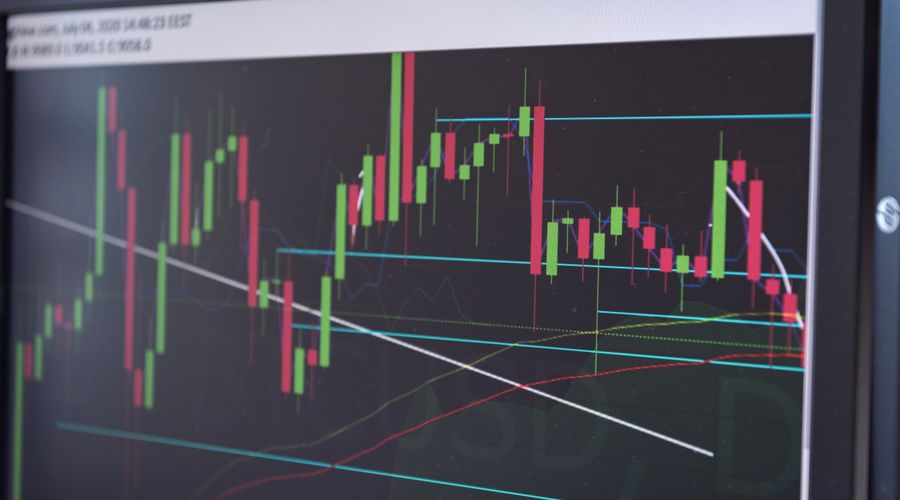
Photo by AlphaTradeZone on Pexels
Tip 3 — Keep a trading journal (that actually teaches you something)
Trading journals are universally recommended and almost universally abandoned by the end of the second week. The reason is not laziness. The reason is that most traders do not know what to record, so they record what happened — price went up, I entered long, it reversed, I stopped out — which produces data that is accurate and completely useless for changing anything.
The journal worth keeping records the reasoning behind the entry. Not the outcome. The reasoning. Specifically:
- What was the broader market structure at the time of entry?
- Where was price in relation to a significant level — supply zone, demand zone, or order block?
- Was the session active (London, New York) or low-volume (Asian)?
- What was the directional bias based on the higher timeframe?
- Why did I believe this level was significant — not just visually, but structurally?
When you review those entries after a month of consistent losses, you are not looking for patterns in where price went. You are looking for patterns in your own reasoning. What you usually find is one of two things: either you consistently entered without a clear structural reason for the level to hold, or you entered in the right context but at the wrong point within that context — too early, at the obvious retail level rather than the structural one. Both are fixable. “Price went against me” is not.
My apprentice described journaling as “basically homework.” He is not wrong. It works in exactly the same way as homework — which is to say, nobody who did it seriously ever regretted it, and most people who skipped it quietly wished they had not. I include myself in the second category, for the record. The first three years were largely undocumented, and I have no one to blame for that except myself and a general aversion to writing things down.
Tip 4 — Know when NOT to trade
This is the tip that never makes it to the top of the list. It should be second, after understanding context. The number of genuinely good setups — setups with clear structure, a clear level, a clear directional bias, and an active session behind them — is much smaller than most retail traders assume. Trying to find a trade when one does not exist is not discipline. It is FOMO in a suit.
Around major economic news releases
In the minutes surrounding Non-Farm Payrolls, central bank decisions, and CPI releases, price can move in ways that have nothing to do with technical structure. Both directions. Simultaneously, if the number is ambiguous. Stops get triggered on both sides of the market, price reverses multiple times, and the result often looks like what a three-year-old might produce if given a pencil and a clean chart. The technical framework that applies in normal conditions does not apply here. Standing aside is not missing an opportunity. It is recognising that your edge does not exist in this environment.
During the Asian session on major pairs
Institutional volume is lower during the Asian session on EUR/USD, GBP/USD, and similar pairs. The signals that appear in this session carry less weight because the participants creating them are operating with less volume. A formation that would be meaningful in the London session, confirmed by institutional participation, is less reliable at 3am GMT when the major banks are not yet active. The post on forex market trading hours covers exactly when institutional volume concentrates and why those windows matter.
After two or more consecutive losses in the same session
Revenge trading is the single most reliable way to turn a manageable loss into an account-ending one. The internal monologue is always the same: one more trade, just to get back to breakeven, just to recover what was lost in the last hour. The problem is not the trade — it may look structurally identical to a setup you would take in a neutral state. The problem is the decision-making behind it. A trade taken under urgency, when you are on tilt, when the position size is slightly larger than it should be because you need to make back the earlier loss — that trade is not the same trade. Close the platform. Come back tomorrow.
When the structure across timeframes is unclear
If the daily chart shows a range and the hourly shows a downtrend and the 15-minute shows a potential reversal — all simultaneously — the absence of a clear read is itself a signal. Not every market condition contains a trade. Not trading is a position. It is often the correct one, and it is free to hold.

Photo by Alesia Kozik on Pexels
Tip 5 — Understand context before you enter anything
This is the tip the other four depend on. It is also the last thing most traders learn, when it should be the first.
Context means understanding why price is at the level it is currently at. Not just where price is. Not just the recent direction. But the structural reason — the explanation for why this specific level might matter, backed by something other than the fact that it looks clean on the chart.
The complaint I hear most often from traders who have been losing consistently for more than a year: “my analysis was right but I still lost.” The direction was correct. The entry was taken at a level that looked logical. The trade was stopped out, and then price did exactly what was expected — without them in it.
This is not an unlucky pattern. It is the mechanism. When retail traders enter at obvious levels — previous support that visually looks like resistance, round numbers, the high or low of the prior day — the stop cluster that forms just below or above that entry is visible to the participants who move price in size. Price gets pushed through that cluster, the stops are triggered, and price reverses. The trader who was directionally correct exits with a loss and watches the market do exactly what they predicted, without them.
The Bank for International Settlements reported daily forex turnover of $7.5 trillion in the 2022 triennial survey. The participants driving that volume are operating within structural frameworks that retail education largely does not teach. They are not using the same indicators or entering at the same levels as retail traders. Their behaviour is driven by logic: accumulate where previous supply was absorbed, distribute where previous demand was exhausted. That logic repeats. The levels it creates repeat. The market is not random. It is institutional.
Understanding context means learning to identify where institutional activity is likely to be — at supply and demand zones, at order blocks, at levels that hold because they were created by large-order activity rather than because a moving average passes through them. These are the levels that matter. Not because they look clean, but because they represent a prior decision by a participant with enough volume to move the market. That participant tends to return to the same levels. The chart records where they have been. Context is the ability to read that record.
Without context, “follow the trend” gives you a lagging indicator that fires too late. “Manage your risk” gives you a percentage with no structural home for the stop. “Keep a journal” gives you data with no pattern to find in it. Context is what makes the other four tips functional. It is also, consistently, the part that retail trading education saves for the advanced lesson that never quite arrives in a usable form.
How candlestick formations interact with structural context — why the same pattern is meaningful at one level and noise at another — is covered separately. The principle is the same: the pattern is the last confirmation of a thesis you should already have. Build the thesis first. Then look for the confirmation.
Who these tips will not help
This section exists because most forex trading guides tell you what to do without telling you when not to do it. That omission is itself a tell. Here is who these principles will not help — at least, not yet:
If you are using leverage you cannot afford to lose. No tip corrects for a position size that was too large before the trade was taken. The mathematics of a loss at 10x leverage are not improved by knowing where supply zones sit.
If you are trading to recover money you have already lost. The mechanical problem is that the second trade always starts from a compromised decision state. Urgency overrides structure. “Just one more trade to get back to B/E” is one of the most reliable entry signals for the market to go against you, not because the market knows you need it to go up, but because the mindset produces entries that are not structurally justified. The tips address mechanics. They cannot address what happens to judgment when the account is down and the urgency to reverse it overrides everything else.
If you have not yet built a read on market structure. The tips are confirmation tools. They are not a foundation. The foundation is the ability to read a clean chart and identify where significant levels sit, what the directional bias is across timeframes, and what the market is doing before you look for an entry. Build that first. The tips become useful once that foundation exists.
If you are expecting the market to eventually reward effort alone. The market is indifferent to how hard you have worked. It rewards understanding. Understanding and effort are related but not identical. Years of screen time without understanding what you are looking at produces very experienced confusion. The work that matters is the work of understanding the mechanism, not the work of accumulating hours.
You can find most of this on YouTube for free. Some of it is there, taught accurately, in six minutes, by someone who presents it well. The question is never whether the information is available. It is whether it is being taught in the right sequence, with the mechanism explained, by someone who has tested it under live conditions across multiple years and market conditions. Rinse, repeat gets most traders to the same place. The sequence matters as much as the content.
Frequently asked questions
What are the most important forex trading tips for beginners?
The most important tip for any beginner is to learn what context is before learning what entries are. Context means understanding why price is at a particular level — the structural reason, not just the visual pattern. Most beginner guides teach entries first. That is the wrong order. A good entry at the wrong level loses money. A decent entry at the right level, in the right session, in the right directional context, gives the trade a reason to work. Everything else — risk management, journaling, session timing — is built on that foundation.
How do I stop losing money on forex trades?
Stop entering trades before you understand why the level you are entering at is significant. The most common reason for consistent losses is not poor execution — it is contextually incorrect entries. The level looked like support. The pattern looked right. But there was no structural reason for that level to hold, and price moved through it. Before every entry, be able to state clearly why that level is likely to attract institutional activity. If you cannot state it clearly, the trade should not be taken.
What is the best forex trading strategy for consistent results?
There is no single best strategy, but the best-performing retail approaches share a common structure: they identify significant levels first, wait for price to reach those levels, look for confirmation before entering, and manage the trade within a clear risk framework. What separates them from strategies that fail is the level-first sequence. Every approach that starts by looking for a signal and then justifying a level performs worse than the same approach applied level-first.
How much should I risk per trade in forex?
The 1-2% figure is the standard recommendation and is mathematically sound. But the figure alone is incomplete. The stop loss should be placed where the trade is wrong — at a structural level, not at a fixed pip distance from entry. Once the stop placement is structurally correct, size your position so that if the stop is hit, you lose 1-2% of your account. Do not size the position first and then place the stop at whatever distance the size implies. That sequence produces stops at arbitrary levels, which are predictably targeted by institutional participants.
Why does my trading analysis seem right but I still lose money?
Because the entry was taken at the obvious retail level — where the majority of stop-loss orders cluster — rather than at the structural level where the reversal was most likely to occur. If you entered at a well-known support and were stopped out just below it before price reversed back up, you were not wrong about direction. You were wrong about entry location. Institutional participants know exactly where retail entries and stops cluster around obvious levels. The move through those stops is predictable, not personal.
When should you not trade forex?
During major economic news releases, during the Asian session on pairs that are not JPY-related, immediately after two or more consecutive losses in the same session, and whenever the structure across multiple timeframes is contradictory or unclear. Not trading in any of these conditions is not a missed opportunity — it is applied discipline. Every account that has survived long enough to reach consistency has a trading history full of days with zero trades.
Do forex trading tips from YouTube actually work?
Some of the information is accurate. The problem is not accuracy — it is sequencing. Tips without the structural context that determines when and where they apply produce inconsistent results because they get used in conditions they were never designed for. The trader applies them indiscriminately, with no framework for distinguishing a valid setup from a random occurrence. That is why a trader can read fifty tip lists, understand each tip individually, and still lose consistently. The tips are not the foundation. The framework is.
Marco has traded forex from London since 2009. He spent the better part of a decade learning the hard way that tips without context are just words dressed up as wisdom — which is to say, he has owned the same five tip lists in various formats since 2011 and has nothing to show for it except a strong opinion about where they go wrong. He now coaches traders on reading market structure before setups. His apprentice recently pointed out that Marco's notes from 2013 are essentially a personal trading tips list. Marco has nothing to add to that.
Start Seeing What's Really Moving Price
Most traders react to price. Learn to read what drives it.
See how Rethink Forex works